Showing posts with label China. Show all posts

Saturday, June 14, 2014

Of getting lost in Gansu

The mildly alliterative title will have to be taken as artistic license, though my mind did fade into a strange netherworld for a few days during my journey as will become clear soon enough...

It has been almost six months since my last blog post and so much has been happening in the mean time. Summer has come and gone in Cape Town and we are left with a hodge-podge of beautifully chill but sunny days where the blue sky looks to be photoshopped and rainy days where the mountain is hidden behind sheaths of cloud which race down the mountain, laughing at all umbrellas in their path.

Toady is a rainy one, but I am sat in my local cafe, O'ways, which serves wonderfully prepared Chinese teas and satisfyingly homely vegan food to a host of regulars who nod and smile as we see each other on sweltering Saturday mornings as well as the rain-soaked ones. Today I have a steaming pot of pu'er tea sitting on a candle and the egg-timer about to tell me that it has reached the perfect brew. Memories of sitting in a tea-house in Kunming, chatting with the owner for an entire day and tasting some of the most amazing pu'er teas I've ever been lucky enough to sample flood back.

I am now back in Cape Town after a considerable time in distant lands, and I will be away for another two weeks before racing headlong into teaching towards the end of July. To be honest while the travel has been as satisfying and inspiring as always, and the conference I was at in Beijing was productive and fascinating, I am very much looking forward to meeting the new first year cohorts whom I will be trying my best to get through the slings and arrows of MAM1000, renowned as perhaps the scariest course in the university, though in reality I know that every one of the 200 plus student in front of me will have the capacity to ace it given the right push. MAM1000 I have taught before but I will also be teaching honours string theory this year which is going to be a lot of work, but should also be very rewarding.

Before all this starts I will be taking off to Slovenia for a one week school and a one week conference on non-linear dynamics which looks like it's going to be utterly fascinating. On my way to the venue in Maribor, I will pass through Ljubljana which holds powerful and positive memories for me and an overnight stay there will allow for some important moments of reflection.

Right, I have gone way off topic, so back to the last month.

Back in 2008, just before the Olympics in Beijing, I went far West, into the heart of Northern China to one of the holiest mountains of the Daoist religion, Kong Tong Shan, just on the outskirts of the city of Pingliang in Gansu province to hunt for an eclipse. The ensuing, somewhat farcicle adventures were chronicled here.

I was rather fascinated by Gansu on that short trip and vowed to return some day to explore this province which is not, in general, on the tourist trail. The people, on my first trip there, I found to be quiet and reflective, and a lot calmer than their Eastern counterparts, the landscapes are desolate and dry, and the culture is a mix of Han Chinese with strong influences from the Western Muslim minorities and a history built in large part on the trade along the silk road.

This time I had a little longer to explore, and with only a handfull of city names in my head I booked a train to Lanzhou, the capital of Gansu province, a city known for its pollution, for the fact that it straddles the Yellow River and for its beef noodles.

The train ride from Beijing was 18 hours and so I booked myself into a hard sleeper, which means that you have one of 6 bunks in an open compartment with no barrier between you and the corridor where many a sociology major could happily pen their thesis on the comings and goings off the Chinese traveler.  The beds are thin and hard and just long enough that my feet poke into the aisle, but I tend to be able to drift in and out of sleep on these far from ideal mattresses.

The journey was a trial by fire, being thrown headlong into so many of the habits of this land which are both trying and fascinating for the foreigner. Within a few minutes of heading off, a middle-aged woman in my compartment had taken out her phone and started playing her music full volume. while in the UK, it is likely that nobody would say anything at first, everyone else in the cabin would roll their eyes at each other and make tutting motions until a consensus had been built that this wasn't on, at which point the bravest might, possibly, say something.

I searched around to make eye contact with the others in the near vicinity, waiting for the moment where we would all agree, by silent majority that this behaviour was not acceptable and someone would say anything, but nobody looked up from their games, or from staring out of the window, so I simply rolled my eyes to myself and tried to block out the music.

I took this lack of response to mean that nobody minded the music, and reprimanded myself for judging everybody by my particular yardstick of what I considered good behaviour. This same thing happened frequently on my journey, with people playing phone games, TV shows and music out loud to the train, bus, hotel lobby or restaurant, with nobody showing any sense of disapproval.

I asked several Chinese friends on getting back if my appraisal had been correct and the Chinese simply didn't think of this as rude behaviour, and was surprised by the response. It turns out that most people on the train would have been pained by the blasting music, thinking that the woman was very rude and, as is so often used as the excuse, or perhaps the blame, uneducated. However, it simply isn't in the Chinese culture (a term which means far more than does the term British culture - see On China, the best book I have ever read on the history of this country) to alter the hierarchy and poke ones head above to dictate what should and shouldn't be done. In this statement I am both misunderstanding and misrepresenting, but this is roughly the conclusion I have made from speaking with a good number of friends on this subject.

We raced on West, and eventually the music came to an end. Half hour speeches would echo from the train tannoy every now and then, lecturing us on the benefits of drinking milk. Both men and women would hack their phlegm loudly and dramatically and spit either into a corner of the compartment, or, if it was within easy reach, the bin, and smoke would waft through the cabin from those on their way to chain smoke in the spaces between the carriages.

The beginning of this journey may seem negative, but this was really a period of acclimatization for me, remembering those habits which I someone grew more accustomed to when I lived in Beijing and had to re-evaluate in terms of how I would deal with them. In the end one simply learns to live with them for, if you allowed them to bother you, you would be constantly on the offensive and constantly getting into confused arguments with those who didn't think that their habits had anything to do with you. I take this as a lesson in patience and a study into another culture and eventually the zen descends and I can live with these practices.

As night drew on and I drifted in and out of sleep, attempting to meditate on the snores of the men and women around me, I listened to podcast after podcast, which to be honest kept me sane through a lot of my time on this trip.

By 5am the cabin was abuzz again and I helped myself to a breakfast as it flew by on one of the trolleys, the woman pushing it shouting out the daily specials for anyone who happened not to have already been woken by the general buzz of those grunting at top volume on their phones and the tannoy advertisements for some other government-advised health practice.

Around six thirty I found myself in Lanzhou, bleary eyed and ready to explore after finding a hotel not far from the station. On this occasion I had booked in advance but in general I would simply turn up in a city and find somewhere to stay on the spot. I dumped my bags, had a shower and headed off down the street. The noise and smell of a street in China is something which makes me feel truly at home. I would never want, or indeed be able, to live in China again, though I am fascinated and enamoured by the country in many ways, but the pollution and general pace of life in Chinese cities is, I am sure, enough to knock decades off one's life. That said, walking through a Chinese city, exploring the dumpling stands and the noodle shops, marveling at the styles and smiling back at the stares, brings a certain calm detachment which I don't experience anywhere else.

I made my way towards the Yellow River and found myself in Lanzhou's Waterwheel Garden, still early enough in the morning to find old men practicing Tai Chi and women walking around backwards vigorously slapping their arms to promote both mental fitness and good circulation.

Image from http://www.topchinatravel.com/pic/city/lanzhou/attractions/Waterwheel-Park-7.jpg

I found a tea garden in the park where I went for the next couple of days, sitting, reading and watching the world go by and drinking litres and litres of a combination of green tea, goji berries and miscellaneous herbs and fruits which seemed to be a local speciality and good, either for my period pains or possibly for renal problems - I could never quite figure this one out.

Lanzhou is also famed for its beef noodles, which can be found all over the city.  The noodles themselves are hand-pulled and thrown into a rich beef stock with chunks of meat, plenty of chilli, coriander and cabbage, and with a miscellany of fermented vegetables on the side. While nothing compared to Vietnamese Pho in terms of subtlety and fragrance, this is a hearty, very tasty dish which is a perfect way to satisfy a stomach fresh off an 18 hour train ride. The fact that the noodles are pulled in front of you, as the soup is boiling adds to the experience and the freshness of this very famous dish. (From Austin Guidry)


My days in Lanzhou were both a time to acclimatize, to get my Chinese back up to speed, which happened far quicker than I had imagined, and to plan the next part of my journey. I decided to head far West after this, to Dunhuang, perhaps the most famous part of Gansu province, with the Gobi desert at its feet and the Mogao grottos nearby.

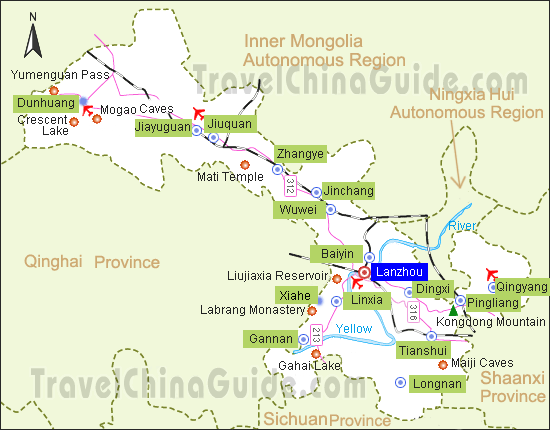
Another overnight train ride took me a further 1000km away from Beijing and right to the most distant corner of Gansu, close to the intersection with Xinjiang and Qinghai provinces. (From TravelChinaGuide.com):
On the way I met a couple from Guizhou, who, on seeing that I had nothing planned and was just going to wing it as I arrived there, persuaded me to join the tour they were taking. Having been on one Chinese tour bus before, I was reticent, but also realised that this was probably going to be the most convenient and cheapest way to see the sights.

Arriving in Dunhuang we were picked up by a minibus with 20 or so rather bemused Chinese folk from all over the country, trying to figure out what I was doing there. To be honest I was also trying to figure out what I was doing there, but having traveled enough in China one realises that sometimes you just go along for the ride and don't ask too many questions. We started off by heading to the desert, and the famous Crescent Lake, built around a small oasis and with sand dunes hiding it from prying eyes. A short camel ride across the dunes took us up to see the views of the desert, stretching into the distance.


The site is very touristy indeed, but still impressive and the Crescent Lake feels like so many other sites in China, recently rebuilt and without the authenticity of a Roman or Norman ruin. I think that again my perspective of seeing many partially-destroyed but real historical sites through my life colour my view of such reconstructions and I feel that I have to remove my prejudice somewhat when I come across such Chinese versions of historical accuracy. I can see positives to both attitudes but do find myself less moved by a newly reconstructed model of an historical piece of architecture.
After a few hours in the desert we were fully dessicated, utterly shaken by the camel rides, and ready to move on. The bus took us next to the Mogao caves, a series of hundreds of grottos built into the side of a small mountain and each one holding the Buddhist iconography, statuary and relics of families who have, over the centuries made their offerings to Buddha for a happier, richer and more peaceful life. Unfortunately photography is prohibited within the caves but there are plenty of impressive pictures to be found here.

At this point my Chinese was stretched to breaking point as the two hour tour, in which we visited some two dozen caves, was led by a Chinese guide. Right now I am fluent in basic Chinese but there is a sharp cutoff whereby anything with specialised vocabulary tends to be beyond me. I got the general idea of the use of the caves as family-owned places of worship, but the details were sadly lost on me. In contrast to the Crescent Lake, the Mogao Caves have been very well preserved in their original form, and the enormous statues and incredibly detailed illustrations are spectacular, even without the benefit of knowing the significance of every image or the meaning of the particular hand configurations which one Buddha might have over another.

We stayed in Dunhuang overnight and then next morning started on a six hour minibus trip to Jiayuguan. This was the beginning of some of the physically hardest few days I've ever had and, as we started off on our journey and my body started shaking and waves of nausea started overcoming me, it was clear that I was coming down with something. I was sat in the front seat of the bus, my knees up against the dashboard and completely unable to move, trying to stave off the cramps of being stuck in such a confined space while attempting not to let anything escape from any orifice of my body. Six hours later, unable to eat, and white as a sheet, though thankfully having not embarrassed myself with any unexpected eruptions, we arrived into Jiayuguan. I was shaken from the stress of having to concentrate on every part of my body throughout the journey, and as everyone else started off on the way to the Jiayuguan fort, I slipped away and tried to find a hotel. I hadn't been able to eat since the night before when the Chinese couple I'd met on the train had taken me for the Dunhuang speciality of donkey meat noodles and lamb kebabs.

During the meal the night before we had gone to a number of random restaurants to sample different dishes. At each restaurant the husband had insisted on paying. I had protested, pleading to be able to at least pay at the next place. He of course had agreed, and then reneged on the promise as soon as it came to pay the bill, physically pushing my wallet away. In the last restaurant I got up as the pile of kebabs diminished and headed to the counter to pay the bill. He rushed up, just as I had given the money to check the bill and looked alarmingly at the amount, embarrassed that it was the largest bill of the evening. As we went back to the table, the mood changed and I realised that in trying to be fair, I had really made an enormous faux pas. In attempting equality, I had managed to humiliate this man in front of his wife, and in front of the owners of the restaurant. I have always seen the game played whereby everyone tries to pay the bill after a meal in any restaurant in China, and have often played along, but I realised, all too late on this occasion that it really wasn't a game, and that as a traveler in this man's country, I really should have graciously accepted his payment for everything. The dour look on his face, in contrast to his previous constant shouts of 'gan bei' and beaming smile of being in the company of a foreigner in such a distant place, was enough to make me understand quite how serious a mistake I had made.

On leaving the restaurant he leapt across the street to one of the many stands with vast mounds of the local dried fruit on sale and bought me two enormous bags of apricots and figs, smiling as he handed them to me, showing that with this gift, all was restored and again we could be friends.

Though I have been coming to China for almost a decade now I still find myself in these embarrassing situations, still unable to know quite how to play the game, or indeed whether I should be playing the game at all or not. Thankfully on this occasion the balance was restored with the gift of dried fruit, but I am sure that I have done things which have humiliated others with a simple action or word that I have unknowlingly let slip. I'm sure that I will be coming back to China for years to come and am certain that I will learn new lessons each time I do.

Right, for now that will have to do, as I find myself quickly descending into delirium in Jiayuguan and without a hotel to stay in. I shall continue this as soon as possible and recall the tales of being stuck, unable to eat or get out of bed in the middle of the middle of China, of walking around in a daze in the fort by the Westernmost edge of the Great Wall, of the surreal landforms at Danxia near Zhangye and of my subsequent thoughts as I returned to Beijing.

Sunday, December 12, 2010

A Chinese bus tour to Jiuzhaigou - or a lifetime of cultural experiences in three days

In response to a friend who told me that I would give an excuse about not writing this post due to too much current chaos in my life, thank you for giving me an extra motivation for getting this written, titivations and all!

I wanted to write a post about the trip I made last week to northern Sichuan where I had without a doubt the most interesting cultural experience of my time in China - spending three days on a Chinese tour-bus as the only foreigner.

I return to Europe now after two months in East Asia, six weeks in China and two in South Korea, tired, but very happy with how the program at the KITPC went. I'd been getting this ready for two years, on and off, and the last few months have involved a lot of work getting everything prepared for the start. Once the program began I had the dual responsibilities of keeping things going with talks and discussion sessions, as well as showing friends, colleagues and collaborators who had come out to the program, the Beijing that, thanks to my short time there I seem to know better than many locals. This was a hugely enjoyable task, though after six weeks I was about ready to drop and a two week trip to Korea, working at the APCTP in Pohang and CQUEST in Seoul was a welcome break.

On return from Korea I attended the last two days of the program, said a few goodbyes, and then took off again from Beijing Capital into central China, to Chengdu, the capital of Sichuan province where I was going to treat myself to a photography based trip for a long weekend. My destination was the northern Sichuan mountains, and in particular the valley of Jiuzhaigou, where I went three years ago and learnt a huge amount about photography in the process. Last time I had done everything pretty ad hoc, without booking hotels or arranging my stay during the days in the mountains at all, and it had worked out well. I had arrived from Chengdu, found a bus going the six hours in the right direction, got into the town late at night, found myself somewhere to sleep and then went into the park just before daybreak the next morning.

After asking a friend to help book a flight this time from Chengdu to Jiuzhaigou airport I was told that there was also the option of a deal with a bus trip into the mountains all the way from Chengdu, including accommodation, food and entry to the park for a four day trip for just 45 quid. This sounded like an excellent deal, and having flown in before, i thought the bus ride seemed like a good alternative.

My alarm went off at 4am and I dragged myself to the reception in the hotel in Chengdu, ready for a lift to the main bus pick-up point. By five thirty I was standing with 70 others being bullied by enthusiastic sellers of travel pillows and exotic breakfasts, waiting for buses to various destinations around Sichuan and by 5.45 I was on the bus, crammed in at the back with 35 Chinese men and women from all over the country. Two things were unsurprising at this point, 1) I was the only non-Chinese in the group and 2) I attracted a lot of confused attention. As normally happens in these situations I was spoken about for some time until they realised that I understood Chinese (to a greater or lesser extent) at which point a barrage of questions came my way. These questions came most of the time not in Putonghua, the normal Chinese dialect, but a range of dialects stretching from Shaanxi, Shanghai, Guangzhou, Jiangxi and Sichuan. I struggled a lot of the time to grasp what was being asked, and this continued through most of the trip, though there were a few on the bus who could speak the normal dialect, including the tour guide - I'm still not sure if this was a good thing or not. The guy I sat next to throughout spoke with a very strong Shaanxi accent and I understood perhaps a sentence or two a day of what he said to me.

At 6am we left, set for an eight hour drive ahead of us, and I sat back, ready to get some shut-eye. At this point the tour guide (导李 - 导游 is tour guide and his name was 小李)got up at the front, and with a perky 大家好! started to tell us all about the trip ahead, and about Jiuzhaigou, and the regions of the Northern Sichuan, and the history of the area, and the number of kilometers of road constructed in the last decade, and the stories of previous tour groups, and the local dialects and....well, you get the picture. Three hours later he stopped his stories, admitted that he should let us rest for a bit and finally I drifted off, ready to doze until lunch.

Indeed, I managed to sleep deeply until lunch, but somehow lunch arrived very very early and at 10.30 in the morning we found ourselves in an unheated restaurant, with plates of simple food in front of us, mostly vegetables, the only meat on offer being processed sausage meat which was occasionally thrown in with the veg.

One thing that needs to be mentioned at this point is about heating, something that became an over-riding theme for me for the trip. In Beijing, although the temperatures in winter may dip below minus 20 on occasion, the buildings are heated with central heating - government controlled, and switched on some time around the beginning of November when the authorities deem it cold enough to give the people some warmth, the reverse process taking place some time around March. In the South of the country, roughly from the line of the Yangtzi river down, although temperatures may not get that cold through the winter months, they have no such luxury as central heating and spend the winter much much colder than their northern brothers and sisters. Indeed in Chengdu, where the temperatures may hover around the 5-10 degree mark this isn't much fun, but at 2500m in the mountains of Northern Sichuan, where temperatures spend most of the time below zero, this is not a joke.

I'm not good in the cold and I sat the first day in the unheated restaurant at 10.30 in the morning, shivering in my coat, scarf and hat, digging into 馒头 and simple plates of vegetables while a barrage of questions came my way. Cold, tired and a little confused, it wasn't perfect, but I was at this time aware of the fact that this was an interesting experience to be going through.

Interestingly, through the three days of the trip (it was cut short in the end by a day) I wasn't once asked my name and no name from anyone else was offered to me. This wasn't just because I was foreign, as I never heard anybody else introducing themselves, even though many strangers had come together for the first time to spend an intense few days together. I should also note that had I been introduced to everyone I would have had a very hard time remembering their names. Five years after arriving in China for the first time, remembering Chinese names is still something that I struggle with.

After a ten minute lunch (the first day was quite a leisurely lunch and by the end of the trip, restaurant lunches had been reduced to five minutes of quick slurping and scoffing, frequently taken standing up) we were back in the coach and continuing our winding route up into the mountains.

An hour or so later we hit our first problem as traffic was held up by a landslide on the mountain path. We, sat, patiently as people craned their necks and got out of their cars, but I didn't hear a single complaint about the fact that nothing was happening. Nor did people complain about the fact that smaller cars were overtaking the line of stationary vehicles, thereby blocking both lanes of the narrow road and, when finally the bulldozer arrived, making it virtually impossible for it to get through to the scene of the blockage. When the landslide was cleared we were then left with another conundrum. There were now two lanes of vehicles facing each other, as on both sides of the landslide people had vied to be first in line, and we sat there cars honking and people waving as nobody moved.

It was another half an hour until the congestion was cleared, but again, there was no pointing of fingers and blaming of the people who had blocked the lane of oncoming traffic, and on we went. Each time this happened in the future and I saw the inevitable log-jam build up I would curse the senseless drivers who, through their selfishness wanted to be first in line, thus holding up the whole flow. Of course I kept this to myself as everyone else sat back and either didn't think through the consequences of the overtakers, or just didn't care. This is one of my over-riding annoyances in China, that the selfishness of the individual on the road, although possibly helping them for a few seconds, will add to the burden of traffic and in the end, holds everyone up. The idea of a communist society where the group is more important than the individual seems to be left behind when the car keys are in hand. This is true also of pedestrians and cyclists however who will cross the road without looking where they are going, cars swerving and breaking to avoid them in a bizarre ballet that seems always to be on the edge of disaster and puts me on the verge of a heart-attack several times a day.

An hour later we hit another landslide, this time at the entrance to a tunnel, and again, the same story. This time however the problem of oncoming traffic was faced inside the tunnel which had recently been built and only allowed for a single vehicle to go through some sections, which were still bumpy and wet from recent rains (the tunnel was open on one side). The driver revved the engine to get over a bump and out of the way of an oncoming motor-bike with an enormous loading platform attached to the back. All of a sudden the bus juddered and there was a huge shearing sound followed by a bang. The driver ran to the back of the bus, opened a panel in the floor and got to work on the transmission which had just snapped. Stuck in a tunnel, in the mud, with oncoming traffic facing us, their horns echoing through the small space and a driver running back and forth taking everything from bunches of wire to silk scarves to the back to reattach the transmission, I wondered why I hadn't taken the plane. It truly felt like we were in an impossible situation, but incredibly, after a couple of hours of sweat and concerned looks from the driver, a fragile transmission was reconstructed and, after much toing and frowing, we made our way around the oncoming vehicles.

Not only was the ad-hoc piece of DIY impressive, but the patience of everybody was truly inhuman, or at least un-occidental. There wasn't a single complaint, a raising of voices or eyebrows (except from me as my eyebrows have a life of their own when it comes to expressing opinion), or even a questioning of progress. Everybody sat back and waited, chatting happily in the cold and the semi-darkness. This is in great contrast to taking a plane in China in which the businessmen get very nasty very quickly if the plane is delayed even a few minutes. The difference between those with and without money, and working in the business world in China appears marked in their expectations of others. Many of those on the trip had taken buses or trains to Chengdu, the budget option but often taking a couple of days. These were not rich Chinese off for a jolly between meetings, but nor where they at the economic level of the migrant workers who come into the cities to find work.

Anyway, we made it out, and on our way, changing gear carefully until eventually we stopped off a few hours later outside a small house where the driver found the right contraption to give the transmission a more stable constitution. It took some time, and a few failed attempts and as we sat there and the time ticked by I was getting ready to take my passport from the tour guide, my bag from the bus and hitch hike the next few hundred kilometers to Jiuzhaigou, where I would have been quite happy to find my own accommodation and sort out the next few days independently. However, just before my patience ran out (though I seemed to be the only person getting restless - internally I should note) the bus started up again and we were on our way. The next few hours went by peacefully and without event and at 8 in the evening we arrived into Jiuzhaigou, where I was ready to have a bite to eat, shower off the day's stresses, and collapse into bed.

It became clear pretty quickly that things were not going to be so easy. We checked in and sat down to dinner (the same, simple but perfectly edible food we had had for lunch, and the same that we would have throughout the trip), shivering in the cold as the doors to the freezing mountain air outside stood wide open (the idea of shutting doors when there's no heating inside seems anathema in China - the fresh air seeming to be a positive thing). After five minutes the power suddenly cut out and we were left, not even able to see our breath condense in front of us as we sat in an amused semi-silence.

Candles were distributed and I made my way into my room where I sat on the bed and wondered what the hell I was doing. It was too cold to get undressed, so I got under the covers, coat and all with an extra layer of socks and tried to drift off to sleep, the impotent electric blanket lying uselessly under me. An hour later I got up to check the situation and found that the power was back on and the electric blanket saw that in the end I had a reasonable night's sleep. This was me, in my room, by candlelight wondering what the hell I was doing:


6 am we were up the next day and although the driver had asked us to all be on the bus by 7, all seats were filled 15 minutes early and so we headed off to the gates of the park. This would be unheard of with a Western tour group, and the only such trips I've been on, there would always be the odd few stragglers who would hold up the morning starts. Here however there wasn't a single moment that we had to wait for anyone, and every time we left before our agreed upon time.

We drove the few minutes to the park, the tour guide adding a few additional embellishments to the hours and hours of information he had regaled us with the day before and by 7.15 we were in the park, making our way to the highest reachable point in the West of the valleys.

My biggest fear was that we would have to go around the park in a group, following a flag and all wearing identical red caps, but thankfully once in we were free to do our own thing, so I set off, camera kit in hand and started taking photos of some of the most beautiful scenery on Earth.

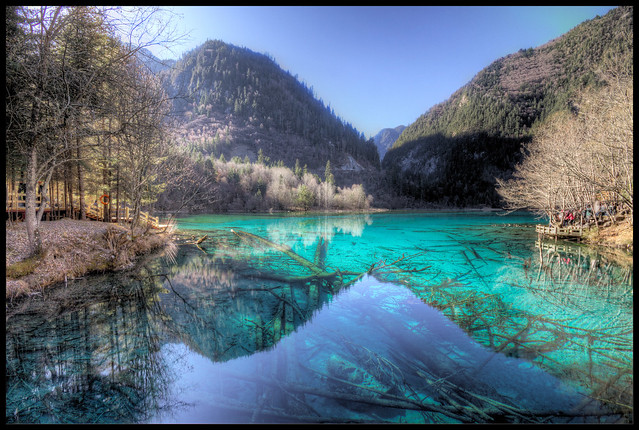
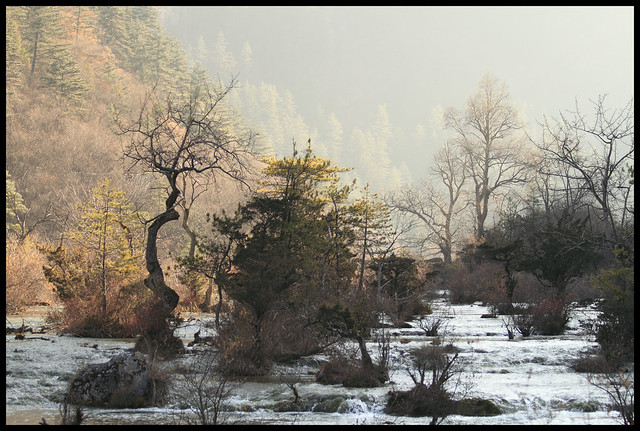
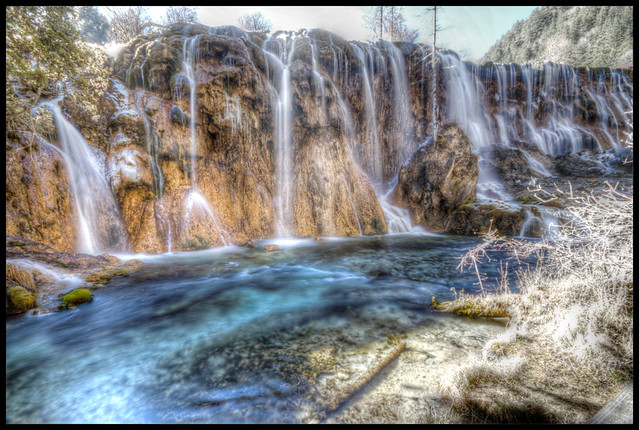
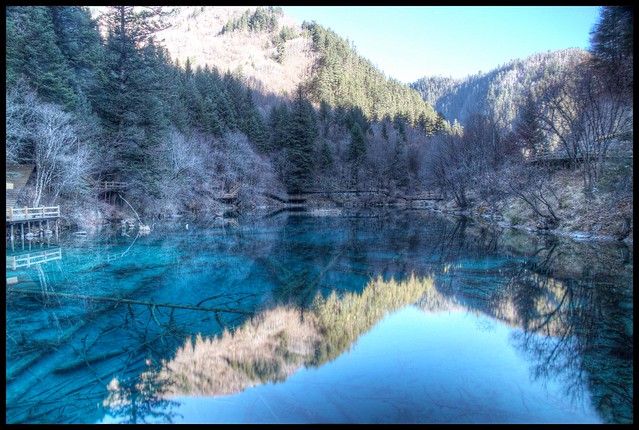
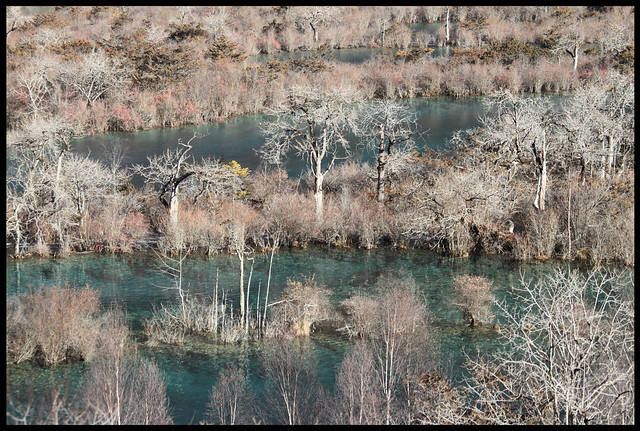
Jiuzhaigou is so spectacular that it's almost unreal. The valley is around 20 km long , rising 1500 or so meters to its summit (at around 4000m) and the river that runs through its basin flows into crystal clear lakes where the copper compounds give some of the most vibrant colours I've seen in any natural setting. Between the lakes are stunning waterfalls you find hidden behind moss covered forest floors.

I had planned, like last time I went, to walk the length of the valley, thereby escaping the crowds who take buses between the scenic spots, but sadly, because it was winter, the paths were closed and the buses were the only option, so I took the buses and made my way down the first valley, experimenting with my camera along the way. Though the winter means that the footpaths are closed, it also means that the skies are clear and this was one of the main reasons I'd chosen to come back. I was hoping for snow on the ground and blue skies, and while the former hadn't yet arrived, the latter was spectacular and I got the bright colours which had been lacking last time with the white blanket of fog reflecting off the blue waters.

In terms of photography I had a few new tricks up my sleeve, and a few more years of experience. For landscape shots I had a 10-20mm sigma lens, I had two neutral density filters (ND8) for long exposure shots of the water and I had a 70-300mm lens for zoom. This along with the Canon 7D I'd brought not long before meant that the new bag of tricks should have given me quite an advantage over the last trip.

I'll detail the rest of the trip soon, but in terms of the results I'm still not that happy. I still have a great deal to learn about composition and technique, but every time I go somewhere like this I find there's a huge learning curve. I'd like to spend a week or so in this sort of situation, going through my photos in the evening and reassessing what went right and what didn't. There are some major compositional changes I'd make to my photographs the next time and some technical alterations, especially in that I would use liveview for every shot and mirror lock-up for added stability, even on wide angle landscape shots. Anyway, although I am only happy with a handful of the couple of hundred shots I came away with this has taught me a lot and I look forward to coming back for a third attempt in the future.

So, I made my way down the valley, finding as many photogenic spots as I could, and attempting to battle with the brights of the sky and the snow on the higher peaks together with the shadows of the trees and mountains.
Jiuzhaigou 1
Jiuzhaigou scenery
Jiuzhaigou waterfall
waterfall in black and white
jiuzhaigou reflection
Jiuzhaigou scenery
(*NB, though I've altered the dynamic range to be able to catch the lights and darks, I haven't increased the colour intensity on any of the above photos. I have a video I took at one of the lakes to show that this is for real*)

As I stopped off in each place I would frequently be called upon to be in a shot with a Chinese man or woman, who wanted their photo taken with the only foreigner in town, and an incredibly tall one at that. At one point I was stopped by a group of four women from Guangzhou and asked to pose with each of them individually and then in an ensemble of dissonant heights. They didn't know at first that I could understand them (they were speaking Mandarin as one of the women was not Cantonese) but I chipped in after one of them made a particularly amusing comment and we all started chatting. I haven't seen a lot of TV in China, but from what I have seen a large proportion of it is taken up with game shows and chat shows with young women gasping excitedly in what seems to be mock amazement at the answers and actions of guests. I'd always presumed this was somehow put on for TV but for the first time I was the centre of this as my answers brought on ever higher shrieks of excitement: British, from Oxford, scientist, post-doctoral researcher, worked for the Chinese Academy of sciences (this is the most prestigious science institution in the country and has an amazing reputation, apparently known to every Chinese man, woman and child), currently working for a Spanish University, etc. etc. It was fun to be the centre of attention for a little while and as we spent the next couple of hours going through the valleys together I basked in my few minutes of stardom, posing whenever they begged for a photo. At the end of the tour through the valley we parted ways, as their tour guide looked on disdainfully at the pouting women.

One of the deals with the tour was that I would have to pay to see a cultural show, put on in Jiuzhaigou town. In fact there were two of these, but having attended such performances before I agreed only to see one of them - most other people on the bus seemingly going for both. After resting in my room for a bit (still without a shower as the water was off during the early evening and cold the rest of the time) I went along to the theatre and after again having a huge amount of attention from the performers who greeted us at the entrance I sat down for two of the coldest hours of my life. The enormous theatre, again with doors open to the outside world was sub-zero and I sat, wearing five layers on top, shivering uncontrollably for the duration of the show. The show itself was a mix of ethnic songs from the local minority groups, dances, outlandish costumes and the recreation of various ceremonies from the traditional cultures of the area. All of these would be extremely interesting if all Chinese performances weren't infused with an enormous dose of what has been perfectly described as the Spring Festival Craptacular, a garish over-performance of kitsch nauseating flamboyance. Melodramatic pop songs sung with heart-rending passion and stomach-churning over-production together with pseudo-grinning dancers pretending to play traditional drums as the recording blasts at 120 decibels over the top of their prancing around tells me little of local culture and a great deal about the clash of Communism and 20th century Western entertainment. Anyway, after two hours of frozen feet and painful muscles, having spent the whole time in convulsions, I was free to leave the theatre and go home to collapse. I had dreamt throughout the performance of running off to find a foot massage place but in the end I was so tired that all I could do was to crawl on top of the electric heater on my bed and fall immediately asleep.

The third day was another 6 am start and although the plan had been to head to Huanglong, we were told that because of the lack of rain and the very cold temperatures up at 5000m it wasn't going to be worth visiting and so we would head back to Chengdu a day early. Our way back was paved with stops at local jewelry factories, traditional Chinese medicine centres and a yak-meat retailer. These presumably are the real way that the tour is able to function, as although the people in the bus had paid little for the trip, a few of them spent fairly enormous amounts on outlandish pieces of jewelry, gems and bunches of winter worm, summer mushroom. Nobody could resist buying a few bags of yak meat, having about 50 spicing options available and I bought a few bags for thank you and goodbye presents for friends in Beijing.

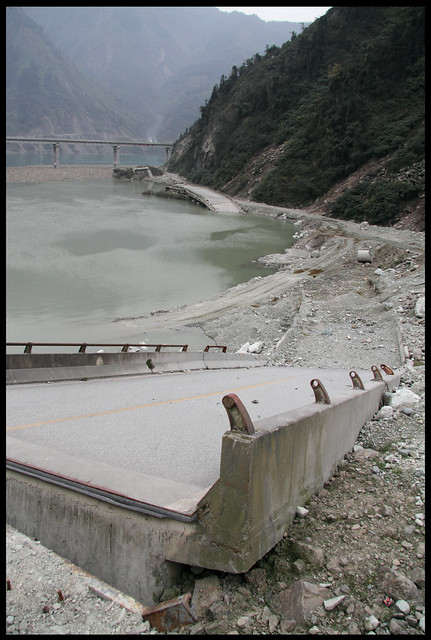
After another 10.30 lunch we started the final 8 hours back home and along the way the tour-guide started telling us about the various rock-falls on the opposite side of the river to the road that we were taking. He spoke of collapsed tunnels, and death-tolls, of cars trapped under enormous boulders and of falling mountain-sides, as the rocks above us teetered precipitously. There were a few key-words that I couldn't understand from his explanation and I asked a girl behind me, who I had just discovered spoke excellent English, what this one particular word meant. It then clicked, that the whole discussion was about the Earthquake back in 2008 which had completely devastated the precise area we were driving through. The road we were on was new, not because the previous one had been old, but because in most places it simply didn't exist anymore, having been torn to pieces in May two and a half years ago.
Wenchuan earthquake road

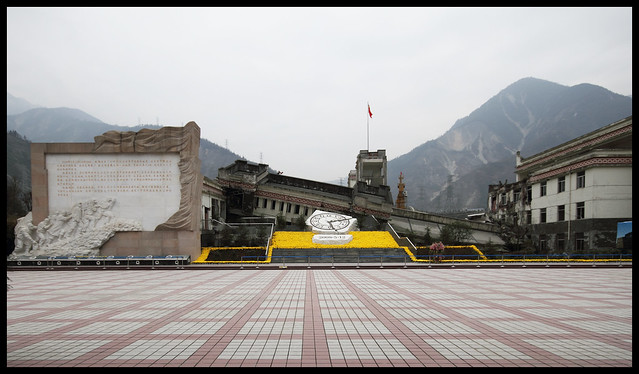
The stories were terrifying and I realised that the place we were headed for, as an alternative destination to Huanglong was Wenchuan the epicentre of the Earthquake and the village which had been devastated by the tremors and the landslides, the side of the mountain which overlooks the valley having fallen into the village and killed thousands upon thousands of residents. We arrived in the early evening and looked around what is an incredible testament to the energy and effort of the Chinese in times of trouble. The village has been all but rebuilt with houses vastly superior to anything they would have had before and a spectacular modern school to replace the one that was buried in the landslide. This of course cannot replace what has been lost, but the effort that has been put into this is place which lost everything is truly remarkable. A good friend of mine went to the village a year after the Earthquake and looked after the children, all of whom had lost family members and friends and many of whom were still in intense trauma, neither smiling nor speaking. She described to me her experiences there where she had volunteered for a week, and the stories were a combination of the amazing strengths of humans and the terrible effects of the disaster.
Wenchuan earthquake epicentre


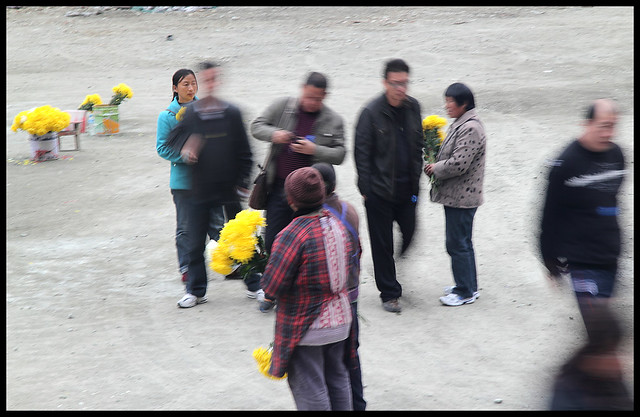
Throughout the village there were people selling locally made handicrafts, not of the finest quality and whereas I would not normally buy much from these stalls I went a bit all out and filled my bag with a fair number of trinkets and fabrics. I found the whole thing a bit strange as the others in the group bargained as furiously as ever with the sellers, I felt completely unjustified in doing so, however much it was expected and however much the prices were inflated to take into account the bargaining process, telling someone that a bag they are selling is far too expensive may be a fun game in Beijing, but not standing next to the ruins of a school!
Wenchuan flower sellers


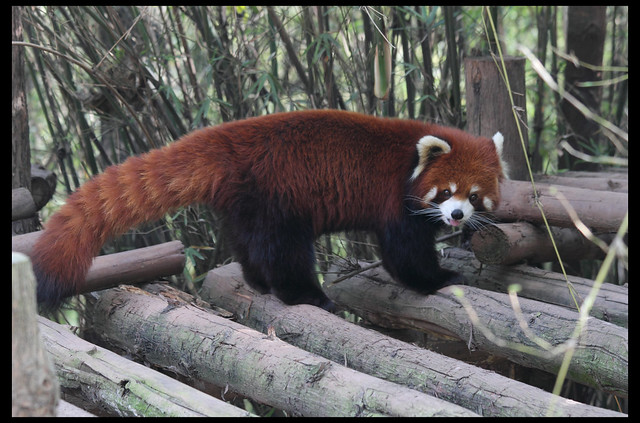
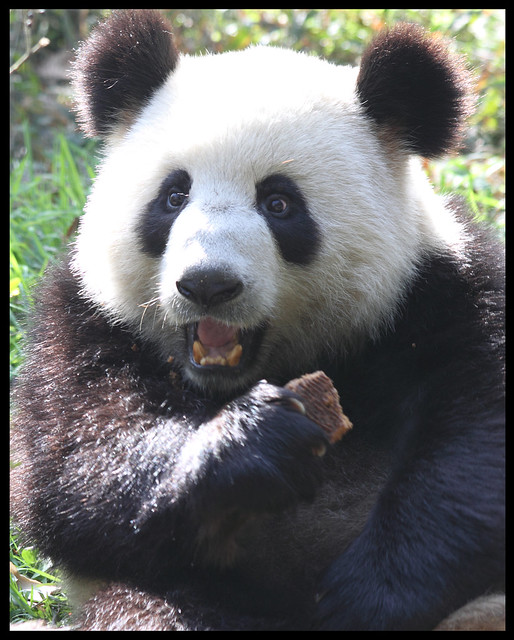
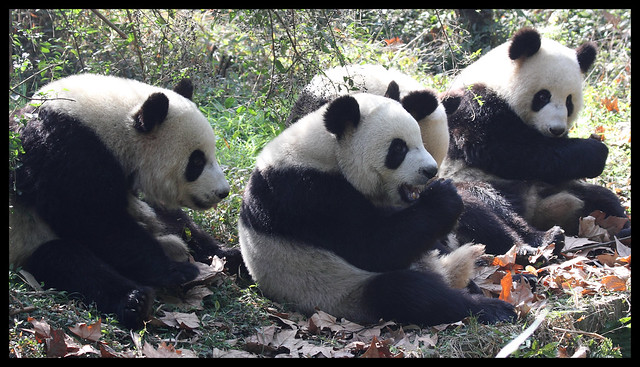
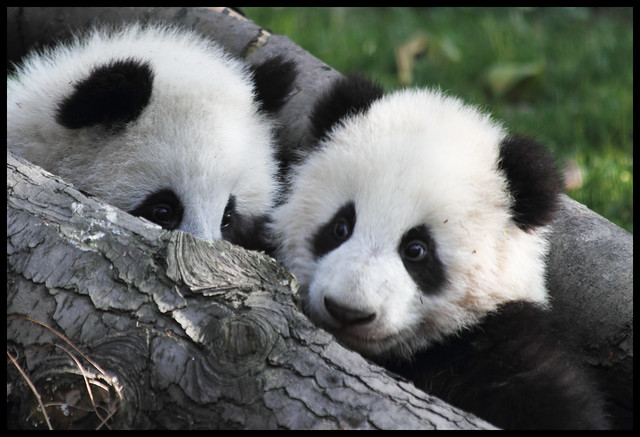
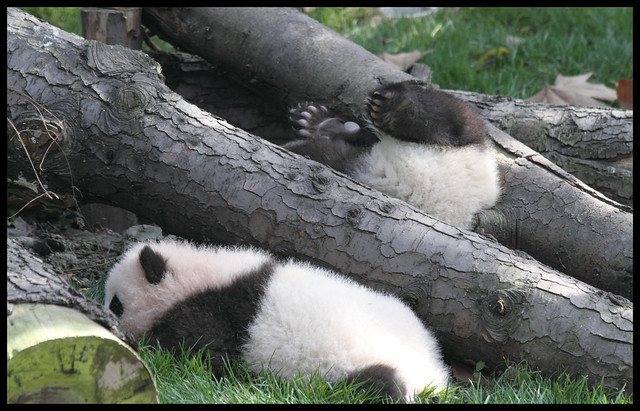
And on we went, eventually arriving into Chengdu a little after dusk. I had expected to arrive into Chengdu the next evening and then leave early in the morning, but unexpectedly I'd found myself with an extra day. Although I know Chengdu reasonably well, I'd never been to see the star attraction of Sichuan and so early the next morning I made my way north of the city to the panda reserve, which has just celebrated the birth of the 300th panda, a landmark which they had been aiming for for some time. A few photos follow and not much commentary is needed. Pandas, both giant and red: very cute, very playful, very photogenic.
red panda
feeding time
feeding time
baby pandas
baby pandas in Chengdu

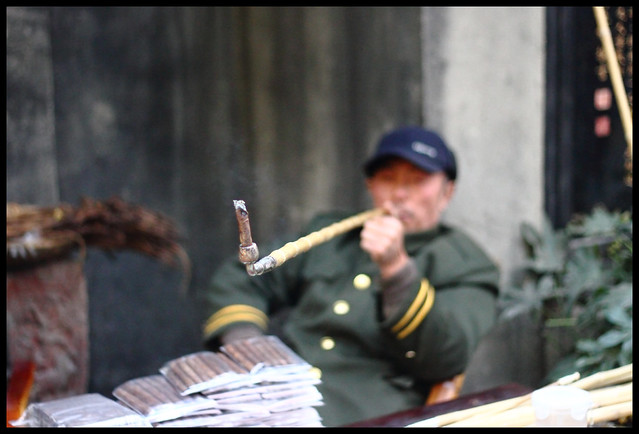
I went in the afternoon to one of the areas I'd explored before in the West of the city which is a group of streets filled with some of the best food in China, tea houses galore and a recreation of what the city would have been like 100 years ago.
smoker in Chengdu

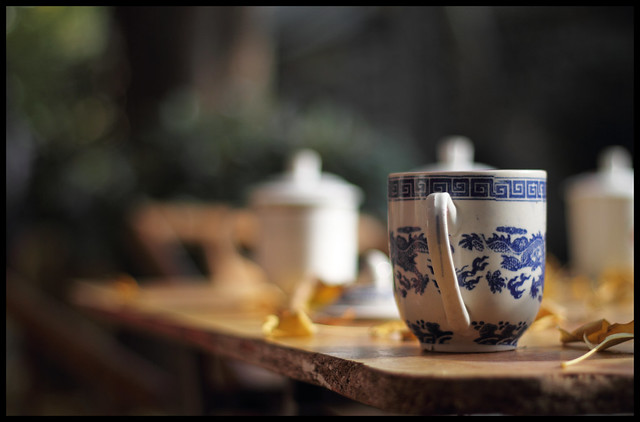
Unfortunately in the last three years a lot of the tea houses that I visited before have been taken over by fashionable cafes and a lot of the places are exorbitantly expensive and full of tourists, but I did manage to find myself in one of the nicest remaining tea houses where I sat down with Landau and Lifshitz and sipped chrysanthemum tea for a couple of hours.
teacup
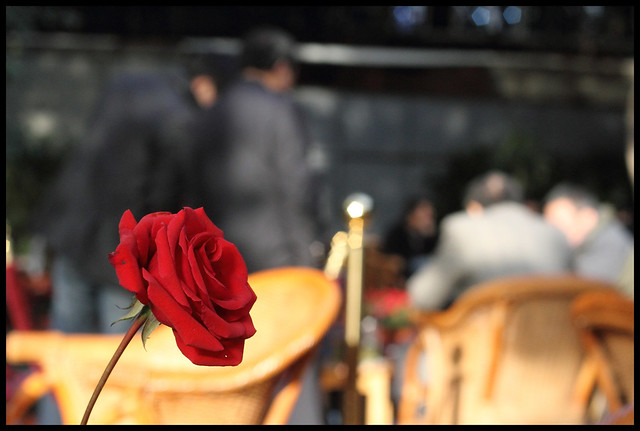
rose in the tea house
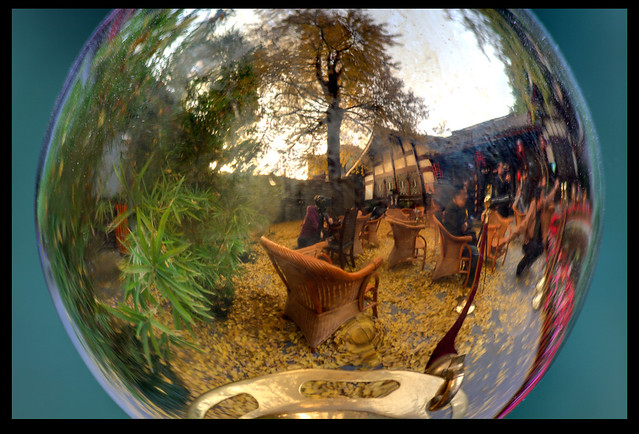
I sat in the garden of the tea-house, under the branches of a wonderful yellow-leaved tree as locals chatted around me, played games and ate endless supplies of sunflower seeds. From time to time a photographer would come in to take a photo of the tea-house in the shadow of the tree and I discovered on speaking to them that the tree was almost a thousand years old and a renowned tree throughout the city. They all arrived with giant tripods and wide angle lenses in hand, trying their best to get both the giant spread of the tree, and the layout of the tea-house in shot. This seemed like a pretty difficult task so I turned my camera the other way and took some photos of the small golden balls on top of the posts separating areas of the garden, attempting to get a fish-eye view of the grounds, tree, tables and all.
Golden orb
I got some curious looks from the other photographers but when I showed them the results, everyone turned their cameras round and started following my idea. This is definitely my most successful if not only instance of trend-setting amongst photographers.

In the evening I indulged in some of the great local cuisine before an early night and a trip back the next morning to Beijing. The last 24 hours in Beijing was packed with seeing friends, some last minute shopping and the conundrum of how to pack two months worth of purchases in some relatively small bags. The answer in the end was to send all the books I'd brought in the post to Germany where they should arrive in three month's time.
The trip back to England was a long and tiring one: nine hours Beijing to Doha, four hours wait in Doha then seven hours Doha to Heathrow. The final leg was made a lot more interesting as I was sat next to Graham Brown-Martin, the founder of Learning without Frontiers who spends his time going between the worlds of technology, education and entertainment, trying to bring the education system screaming and kicking out of its industrial revolution era mold and into the era of interactivity rather than passive learning which is being made ever more exciting by the technological advancements going on right now. I spoke to him of Clay Shirky, Sir Ken Robinson and many others that I know from TED and other such sites and it turns out that he spends a good load of his time with these people when he's not discussing in Westminster, trying to persuade the monoliths of government that perhaps a teacher standing at the front of the class and regurgitating lines is not the best way for kids to gain understanding and creativity. Anyway, we spoke a great deal and if time allows I will go to see an event he's organising with Sir Ken Robinson in London in March.

So, 24 hours in London seeing friends and now I find myself waiting in A Coruna for the train back to Santiago where I have ten full days to finish a bunch of reports, hopefully a paper, give a public colloquium on atmospheric optics, and many last minute odds and ends before I leave officially on the 20th for Christmas. 2010 has been an incredible year and I've had so many wonderful opportunities. I'll do my best to wrap up some of these in the next two weeks as well!

Monday, November 01, 2010

Dancers in Tian Tan

I bought the camera without any plans to use the video feature, but I played around with it a little in Tian Tan park last weekend and found the quality is absolutely breathtaking. The following, rather shakily taken footage (this is my first attempt at film making) was reduced by a huge factor to put on youtube, and the colours in the original are stunning. I may put up a higher definition version at some point.

I thought the whole thing was a rather lovely moment with some great expressions, both facial and through body language of people out for the day, to enjoy the weekend together in one of Beijing's most pleasant temples. Give it a moment for the second couple to come to the front

Saturday, October 30, 2010

Three weeks in and extremely loud on the Eastern front

Blogging has been on the tips of my fingers for the last three weeks but time simply hasn't allowed. There's a critical point where the number of blogworthy events becomes so high that there's no time to blog about them as you're too busy doing them, and helping to run this conference while attending lectures, writing papers, organising lecture visits and showing people the wonders of Beijing has kicked us way into the criticical region. We've had some fantastic lectures and some wonderful evenings and now, three weeks into this eight week program, I'm feeling very happy with how it's going, even if I'm pretty exhausted. The highlight, in addition to meeting up with some old time collaborators and starting a load of new projects has been having the chance to show good friends around a city which I feel very comfortable in, and to see their impressions of China change from a scary, exotic unknown, to an exciting, inspiring place with so much to offer (we've seen everything from hardcore Beijing punk, to tango in the park, to Sichuan face changing, to kungfu in the early mornings to traditional singing in Tian Tan, and so much more).

So, given so little time (about to head out for another meal) I thought I'd update with a few photos from the 7D, which I'm extremely pleased with so far.

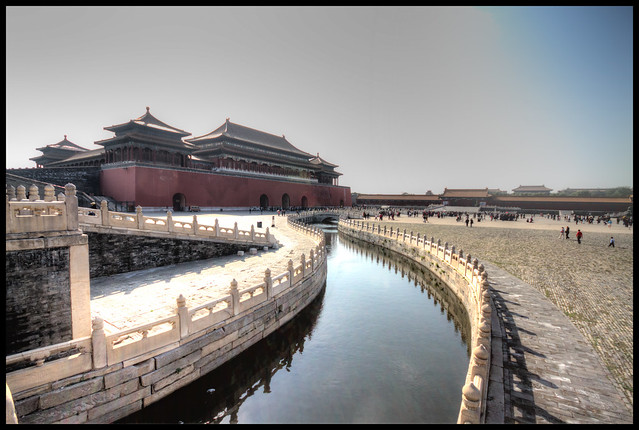
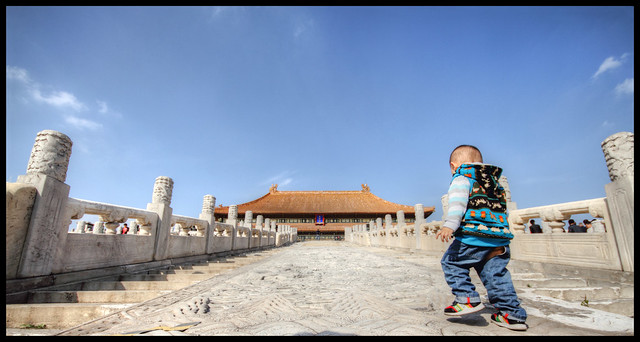
From the Forbidden city:

forbidden city
kid in the forbidden city

and Tiananmen. I love the little doll she's holding limply as the guards march by:
Tiananmen1
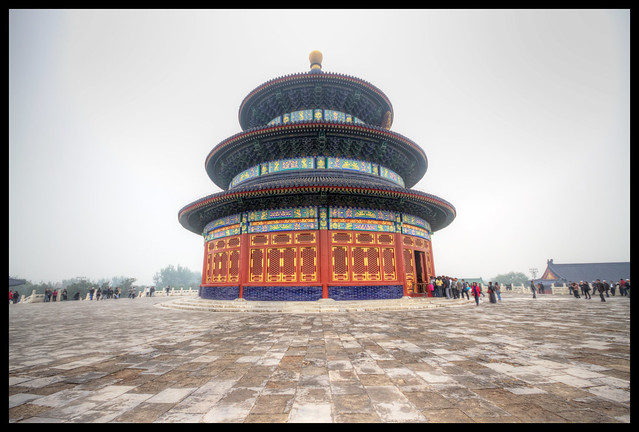
From Tian Tan, on a very smoggy day:
Tiantan
and a close up in Tian Tan:
Sculpture in Tian Tan
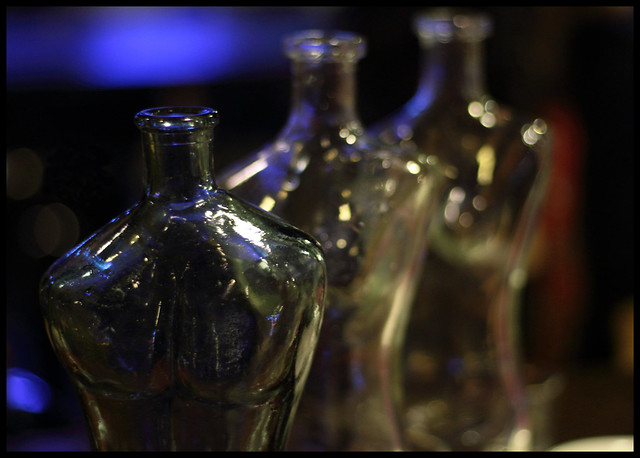
and the soju bottles at the end of an evening in a Korean bar in Wudaokou:
all in a row

There are a few more here, and plenty more to come.

Friday, October 08, 2010

Back in town

After a long trip (no extra leg-room on the flight from Doha to Beijing and so I had to stand up for most of the seven and a half hour trip) I arrived, heavy eyed, but excited to be back in Beijing. I was greeted with the heavy smog of a city of 14 million, and the smell and noise to match. Taking the bus from the airport to Zhongguang Cun and walking into the Chinese Academy of Sciences campus felt wonderfully familiar, even though it was the end of the national holiday when I arrived and so the place was deserted.

I took my key from the porter and made my way back to the same building that I lived for two years here, arriving fresh faced from my PhD five years ago. Nothing has changed, the jaozi stands are still there. The copy shops and the hordes of people playing games remain, the grandmothers taking babies for walks in split bottomed trousers (the babies, not grandmothers) are still as numerous as ever, the men, old and young hacking up big spots of phlegm on the sidewalk remain to keep the pavement from drying up, the smart shoed fruit salesmen still talk noisily on their cell phones and in the tennis courts next to my place there is still a group of people practicing tai qi though I have to see if the sword wielding grandmothers still come out in the early morning.

I'd been rather worried that I'd come back to find a post Olympic sanitised version of the city, but thankfully it's the old Beijing that I know and love - the buildings change, but the underlying feeling is exactly the same.

I'll be here for the next two months and I have to say, though I know from past experience that the stresses and chaos all get too much after a while, I'm enormously happy to be back!

Thursday, December 03, 2009

AdS/CFT and novel approaches to hadron and heavy ion physics - Beijing KITPC program 2010 - an advert

While in Beijing for an academic visit in the summer of 2008 I spoke with my old boss and director of the KITPC, Yue-Liang Wu about the possibility of organising a program on an AdS/CFT related subject. I got the support of the director, got together a team of people for an organising committee (Stanley Brodsky, Nick Evans, Hong Liu, Craig Roberts, Dam Son, Xin-Nian Wang, Urs Wiedemann) and over the last year have been going through several stages of proposals before getting confirmation of support and the go ahead to start inviting people. We've been sending out invitation letters over the last couple of weeks and have a few people now confirmed internally (the names are only viewable currently to the organisers) and thought that now would be a good time to advertise via the blog.

The program will last for seven weeks from the 11th of October until the 3rd of December  2010 and we hope to get as many people interested in AdS/CFT applications to hadron and heavy-ion physics and those involved in these subjects from other perspectives to come along, collaborate, speak, and integrate their ideas in order to advance the field through interdisciplinary works. The idea is for people to come for at least two or three weeks in order that there time can be relaxed and there's plenty of opportunity to build up lasting collaborations.

One of the main problems of the field as I see it is that there are many groups trying to essentially deal with very similar questions but with such different languages that collaboration is often difficult. One of the aims of this program will be to give people the platform and time to reduce this difference and for ideas in diverse areas to be exchanged and discussed in a nice environment, with a good cross-section of international researchers.

The abstract of the program can be found here and I would highly recommend anybody interested in this field to apply to the program, to come and chat with a lot of like-minded people and to explore Beijing, a truly incredible city with a diversity of cuisine, history, language, music, art, architecture and nightlife unlike any I've experienced anywhere else in the world. I love this city, and am hugely looking forward to not only working with a lot of people on a fascinating topic in physics, but to sharing the city with many newcomers.

If you have any questions at all about the program then please ask and I will be happy either to answer directly, or to find out anything you need to know from the staff at the KITPC who are organising all the local details.

Monday, August 17, 2009

English Postdoc chases the eclipse

This was sent to me from a Hubei journalist who interviewed me during the eclipse in Wuhan. It's now online and in printed form. I haven't been able to track down any photos from the journalists who were taking photos of my slightly strange setup but I'll see if I can find anything online.

英国博士后跟着日食跑

荆楚网消息 (楚天都市报) “哪里有日食,哪里就会有我的身影。”昨日上午在黄鹤楼公园,英国帅哥Jon.Shock摆 弄着专业相机,一脸得意地对周围人说。“希腊、俄罗斯、土耳其、西班牙,这些国家我都去过,当然,要不是为了看日食,我才不会去,因为我没有那么多的Money。”29岁的Jon老家在英国牛津,目前在西班牙工作,是个物理学方向的博士后。自从去年在甘肃看过日食后,就惦记着今年7月 22日的日全食。“ 这 可 是500年不遇,并不是每个人都能碰到。”他很早就在网上查询最佳观测地点,最开始他选择在上海,并于一周前从西班牙飞到那里。但后来从天气预报了解,22日当天上海的天气不好,所以Jon赶紧更换地点,乘火车于21日晚到达武汉。
Jon指了指身边的几个同行——德国的john、美国的休斯、法国的巴赫、马来西亚的阿罗约,都是在来汉的火车上碰到的。“他们和我一样疯狂。”(记者王进良 实习生胡幸).

I'll write up a full translation when I have a computer at home (still being fixed in the shop). In the meantime, feel free to google translate. The online version of this article can be found here.

Saturday, August 08, 2009

Fullsimplify

The last of my China photos for the time being. The train from Shanghai out to the airport is currently the fastest scheduled train service in the world, a mag-lev of extortionate costs and and outrageous numbers. The train takes around three minutes speed up, stays at it's maximum velocity for a few short moments and then pulls to a halt in the airport station 30 km and 7 minutes later. It's a smooth ride with steeply banked curves and is about the cheapest way to get from the city to the airport. Here is a snap of the speedometer as it topped out:

Shanghai Maglev

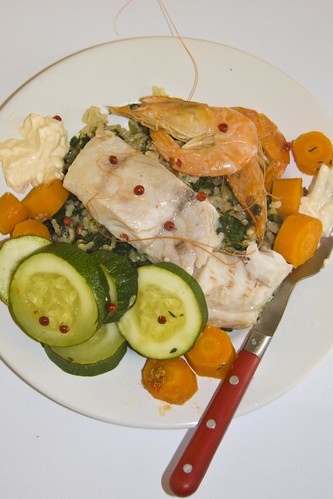
Since coming back to Santiago my life has been considerably simplified, through both external influence and a little help from myself. Shortly after arriving back my butane canaster which I use for cooking (the norm here) ran out, and I've been left with almost nothing to cook with and little time to organise for a new delivery at a suitable time. I had however inherited a rice cooker from a Japanese friend and this simple machine not only cooks rice to perfection but has a steamer compartment too. The discovery of my constrained cooking possibilities has actually opened up a world of subtle but extremely tasty cooking as I've been steaming fresh fish, marinated in herbs and juices, with summer vegetables for the last week, and frankly save for the streaming cold which is making today less than comfortable, I've never felt better.

Wednesday's offering: The timing still needs some tweaking with courgettes becoming overdone in just a couple of minutes (a minute appears to suffice), but the fish and langoustine, marinated in lemon, thyme and pink peppercorns on top of spinach whole-grain rice is a 15 minute, no hassle treat - served with a dollop of lemon and green peppercorn mayonnaise:
Steamed dinner


In addition to this I made the bold step of phoning up my internet service provider on Thursday and turning off my connection to the outside world (I'm currently in a cafe having just completed today's Chinese practice). Having wasted more hours than I care to calculate watching House I thought that enough was enough and have made my home gloriously, digitally silent. Since then I've read more papers and books than I've been able to for many weeks preceeding and the pile of papers which I'd been slowly working my way through for the last few months is actually looking conquerable. I realise frequently that I'm not terribly good at self-control and so need to impose draconian restrictions on myeslf in order to let life continue efficiently.

Anyway, for now I'm going to spend a little while browsing through a new purchase, Heisig and Richardson's Remembering the Simplified Hanzi, which I've been wanting to read for a long time, before getting back home and attacking the pile of articles waiting patiently for me.

Wednesday, August 05, 2009

Beijing snapshot

The department is virtually empty at the moment, as is the city, and I'm working on a couple of papers which have been dragging on for way too long. The work itself is extremely interesting, but ironing out the numerical niceties is beginning to be rather tiresome. Sadly, without these niceties it's much harder to put across our results. Still, I've learned that motivation goes through surges and ebbs, and I'm not worried that the current situation isn't perfect for the work. We'll have these done soon enough and then be onto the next set of calculations...

In the mean time, to continue the updates from my journey:

On the day of the eclipse in Wuhan I headed to the train station, not knowing where I was heading next. I turned up, waited in the queue and pondered where to go. By the time I got to the front of the line I figured that I could just make it to Beijing and back to Shanghai in time to catch my flight which would give me a few days back home (Beijing home) to see friends and go check out some old haunts. It turned out that the only tickets left were for the next morning, which I took and booked myself into a cheap hotel close to the station. I spent a few hours wondering around Wuhan, reading in cafes and snacking on streetfood before heading back and catching my train the next morning.

Train rides in China are good for either practicing your Chinese or getting a good way through a thick book, but such options are exclusive and I ended up talking to those around me for the ten hours of the journey. I arrived in the evening and took the metro back to my old stomping ground and indeed my old building where I was staying with a friend. Plenty of old faces greeted me and I had a nice chat with the dumpling lady who was still there, still hand rolling the same flavours that had been there since I arrived four years ago, before heading up to meet old friends.

The three full days in Beijing passed very quickly but I had a chance to pop into the physics department and meet with the head of department, my old boss, about the program I'm organising for next year (more on this soon). I also met many of the graduate students I'd known before which is always a pleasure. It's good to see the progress they make when you come back only once a year.

On the second afternoon I walked up to the electronics district (Zhongguancun) to see if I could find a piece of kit for my camera. On the way I passed my favourite restaurant, a simple place with fantastic Hunan food: big fish head, mapo dofu, black bean bitter gourd and spicey pork dishes being some of the best I ever ate in China. Sadly my restaurant was no more and the dozen or so establishments which used to feed me most nights of the week along the same stretch had vanished, the space being readied for another anonymous block of high-rises.

My favourite restaurant, Beijing

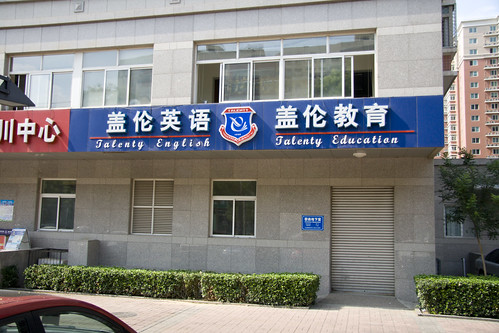
Further along, where the demolition has not yet been felt I came across an English academy which I don't believe I'd seen before and one of the most ironic pieces of Chinglish I've had the pleasure of seeing:
Talenty English, talenty translator
Another piece of Chinglish I wish I'd had the piece of mind to photograph was no a T-shirt of a woman selling clothes on the streets of Wudaokou. The T-shirt was emblazoned with a Union Jack, under which in bold letters was written "New York, New York". Sometimes it's hard to tell how much of it is a double bluff. 

On arrival at zhongguancun it became clear that the item I wanted was out of my price range, but one of the enthusiastic salesmen wouldn't let me go before I gave him an hour's English lesson - I'm surprised that I haven't been barraged with e-mail questions from him since, though that may be because I recommended he make his way to Talenty English!

Anyway, after a few short days in Beijing I got back on the train and headed another ten hours down to Shanghai. This trip used to take 16 hours and within a year or so will take just four when a very high speed track (300km/h+) will be finished, linking the two East China hubs. A lot of Chinese infrastructure sure puts that of it's British and Spanish counterparts to shame, though the reasons behind such advances are simple and often sad.

Anyway, I should have the last instalment tomorrow night, and then we're back on dry land in not so sunny Spain.

Monday, August 03, 2009

Wuhan eclipse animation

Just a quick post today, with many thanks to Toomanytribbles who took my photos of the cloudy eclipse and turned them into this lovely animation. I wasn't taking these in order to get such an animation, so the timing is non-constant, but at least the contrast between light and dark is very clear in the couple of seconds between frames of totality and partiality.

Sunday, August 02, 2009

Night and day in Pudong

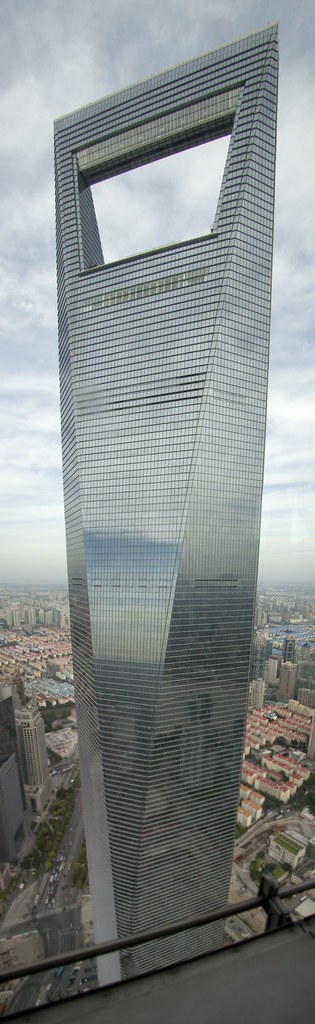
Another couple of shots from Pudong. The first from the Jinmao tower, a five shot panorama of the bottle opener, a Japanese designed building which gives fantastic reflections of the surrounding architecture.

Apart from stitching together the panorama, tweaking the levels, and applying an unsharp mask, this photo is unaltered - no HDR, no saturation manipulation:

bottle opener panorama
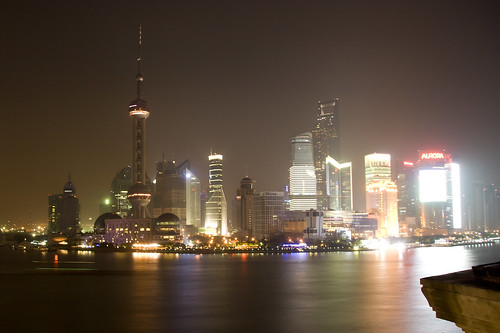
And secondly from an evening on the Bund. We went to a bar on the roof of one of the old buildings to pay extortionate prices (My can of tonic water cost me around 4 quid!) but to get a fantastic view over the river and to the sky scrapers on the other side.

A fifteen second shot set up on the ledge of the building:
Pudong from the Bund
More to follow.

Saturday, August 01, 2009

Arranged marriage in Jinan park

No time for extended essays at the moment but I'll try and put up a photo or two each day for the next week or so from my recent travels. The rest of my time is being taken up with catching up with three ongoing projects plus applications which continue to feed on time and energy.

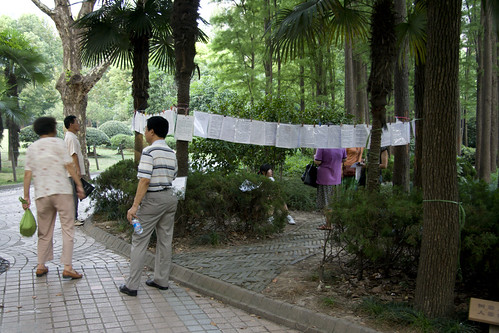
We'll start at the beginning in Shanghai and Jinan park, home of the loudest cicadas I've ever heard, a rather fine bar on the lotus covered lake, an English corner run by an extremely enthusiastic Mr Paganini (adopted name), a swarm of dragonflies in plague-like quantities, but most importantly of all matchmaker's corner. Here parents come to find suitable partners for their children. The pieces of paper you see here are advertisments from desperate parents with all the information one needs to get rid of a child who just won't leave the nest.

Match making in the park
In fact if it weren't for such artificial marriage arrangements, this place would a fine place for a romantic stroll
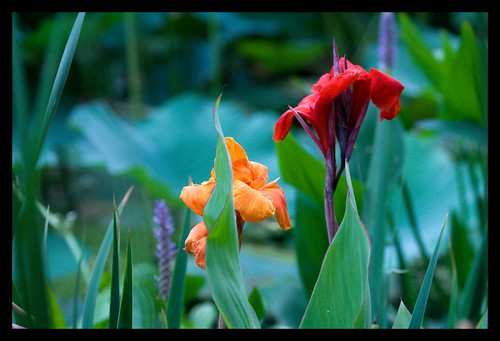
Shanghai blooming
More tomorrow

Total solar eclipse in Wuhan, July 22nd 2009

I spent a frantic few days in Shanghai trying to find where and when the tropical storm was going to hit the city. Two things quickly became clear: one was that the weather websites hadn't predicted a single day correctly in the previous two weeks, and the second was that the skies of Shanghai sure seemed to be clouding up fast.

Searching for satellite data, other eclipse hunter's predictions and any weather website I could get my hands on it seemed that the best bet was going to be to head West to Wuhan. Wuhan sits around 1000 km to the West but luckily the transport system in China is remarkably good. Catching the train on the afternoon the day before the eclipse gave me not only a pretty comfortable five hour ride to the city, but also the chance to meet some fellow eclipse hunters. John, from Germany, stuck out from the crowd with bags bulging with camera equipment, videos, filters and tripods, making my single camera and solar filter rigged up from a Pringles packet look somewhat ridiculous (I did at least have a Manfrotto tripod to give me a little more credibility). John was travelling with May, who works in Shanghai but is originally from Wuhan. In addition were a couple of American TV producers who were in the country for a week or so hunting for this, the longest eclipse of the 21st century.

We got into Wuhan and all made our way to a hotel right next to Huang He Lou, the yellow crane tower, and what I thought would be a good spot to see the eclipse from. Getting a bite to eat the night before in an outdoor food market gave me a chance to indulge in some stinky tofu and an excellent dish of spicy pork before heading to bed.

I hadn't slept more than a couple of hours the night before, worrying about where I could see the eclipse from, and that night too I couldn't sleep for the expectation of what we may see the next day. Arriving into Wuhan the skies were clear and at night the stars came out, or at least attempted to poke through the light pollution of the city of ten million.

So, a little bleary eyed, but very excited we met at 6.30 the next morning to get ourselves ready for the event with plenty of time to find a position and set up shop.

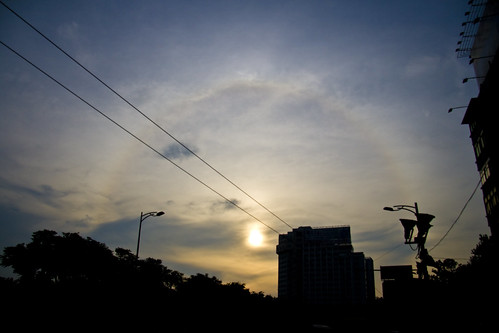
Walking out of the hotel I looked up to the sun and was greeted by a wonderful morning solar halo, a fine view indeed, but a sure sign of some cirrus clouds joining us for the show.

Solar halo in Wuhan, morning of the eclipse
We walked up to the temple and found a large crowd, equipped with eclipse glasses who had had the same idea. At 7.30 we were all let in and rushed around to vie for the best spots. John, the seasoned eclipse hunter discovered the best place and we set up our equipment, waiting for the first signs of occlusion.

While setting up my kit I was greeted by a never ending stream of reporters, keen to chat to the only Chinese speaking foreigner and I was asked the same dozen question for an equal number of newspapers. At one point I was also interviewed for TV but sadly shied away from giving the interview in Chinese.

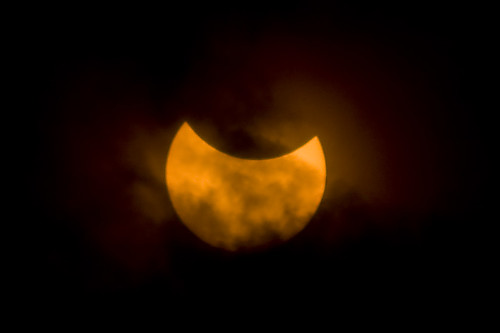
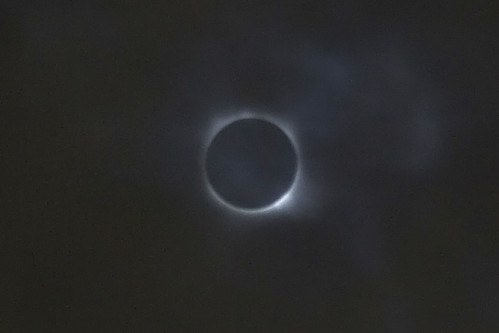
As the time grew closer, the clouds moved in and it was clear that we were not going to have an easy ride. Indeed as we approached the moments before totality the clouds thickened and we were left with only a few glimpses through the patchy cloud of totality itself. I managed a few photos of the sun as the moon gradually moved across the face but it turned out to be very hard to find the sun with a zoom lens and a strong solar filter when the sun is partially blocked by clouds. The solar filter is so strong that only an unobscured sun is clearly visible. Still, I got a few shots and these were perhaps the best couple.
Solar eclipse Wuhan 22nd July

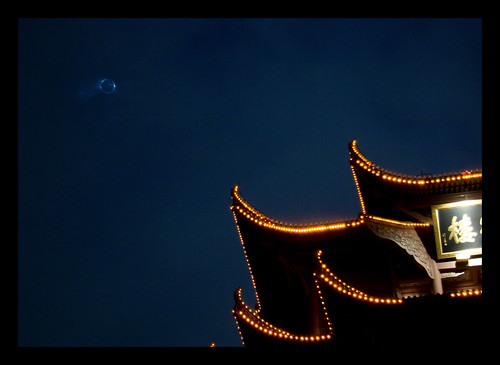
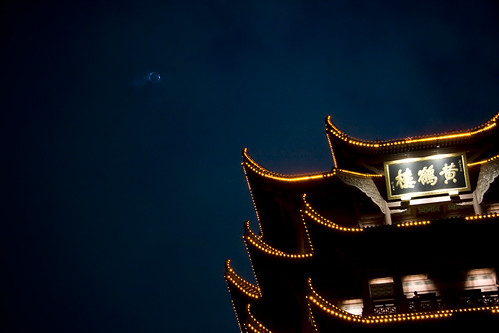
For totality itself the crowds around cheered as the sky darkened completely, lit only by the horizon where totality was not apparent. They seemed happy enough with the darkness and were not sad at the lack of the spectacular corona. I did my best and got a couple of shots with the zoom before changing lenses and taking in some wider angle shots to include the temple itself. I have a series of 20 or so shots which I will make into an animation as soon as possible. In the mean time, here are my efforts from the moments of totality, clouds included. These were from the clearest ten seconds or so of the five minute totality.
Solar eclipse Wuhan 22nd July
Solar eclipse Wuhan 22nd July at Huang He Lou

It was a strange mix of excitement and disappointment, mixed with not a little amusement, knowing that I'm probably one of the few people in the world who has seen three cloudy solar eclipses in a row. I will of course keep on hunting, and though I may not make it to the next showing in the Easter Islands, I'll be on the case before too long.

Thursday, July 30, 2009

Shanghai heights

Arriving back yesterday after around 72 hours of marginally interupted travel meant that I was never going to get anything terribly productive done. Today has been suprisingly smooth, given the mosquito buzz filled slumber I got last night but I'm now flagging.

I did take the opportunity yesterday to go through a few photos from Shanghai, though I'm yet to go through my eclipse photos in the detail they need yet.

I was in Shanghai for around five days before heading West for the eclipse and had a good length of time to do all the very touristy things which I've never had a chance to do there before (last time I was in the city for 24 hours for a wedding). This included a trip to the top of the Jinmao tower, China's second tallest building, just next to the tallest building, the bottle opener (depending on who you ask - if you ask anyone in China they will tell you that the Taipei 101 is the tallest building in China).

From the top you get a good sense of the scale of this city of 20 million and the amazing variety of architecture, in the skyscrapers, in the Bund and in the burgeoning sprawl which goes on into the haze of rippling heat and smog-filled air.

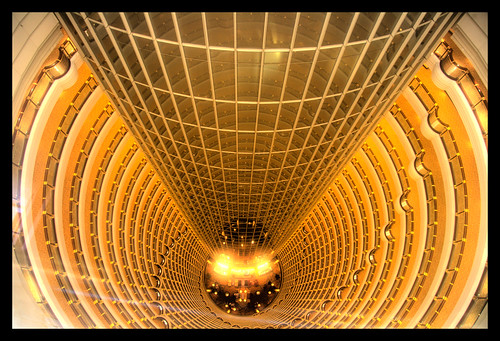
From the inside the Jinmao tower is spectacular. Around half way up you'll find a hotel which can be peered at from the observation deck around the 80th floor and the seeming helix of mezzanine levels is hypnotic:
Inside the Jinmao tower
Looking out you also get a series of stunning views, of the river:
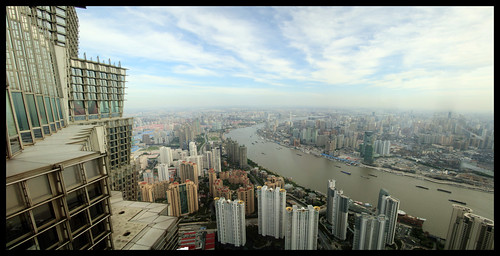
Panorama from the Jinmao
and of the buildings around:
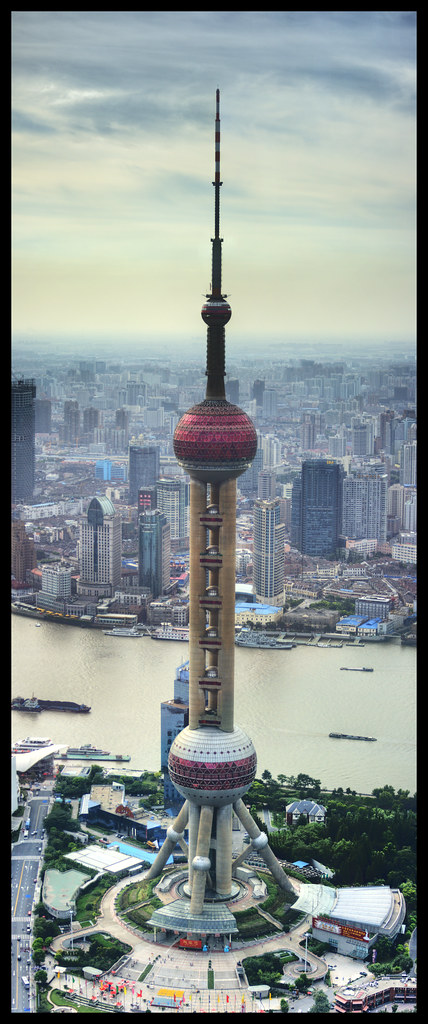
Pearl tower panorama
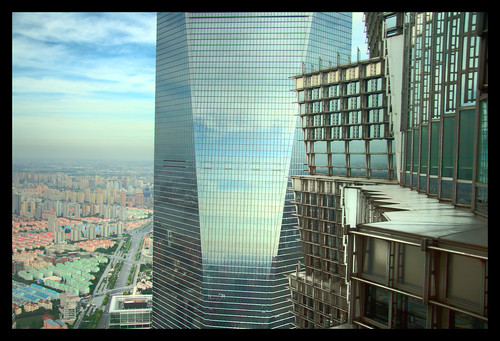
One of my favourite views takes in this triptych of the sharp edges of the Jinmao, the towering reflection of the bottle opener, and the swathe of the city into the distance:
Shanghai triptych
All photos can be clicked for larger versions.


During the many hours of traveling over the last few days I was able both to read a great deal and also to make some plans for myself for the next few weeks and in general for the next year. For now there are things which I need to get finished in the coming days and so I'll get on with processing the rest of the photos either when the current tasks are finished or when jet-lag means that my brain is too mushy to do anything more academic.

Wednesday, July 29, 2009

Atempia

Ten hours on a train from Beijing to Shanghai, eleven hours in a plane from Shanghai to Frankfurt, an hour from Frankfurt to Heathrow, an hour and a half in a bus from Heathrow to Stansted, four hours on the floor overnight in Stansted airport, two hours stood in queues in Stansted, two hours from Stansted to Santiago - home, tired, happy, in need of nutrients, will update when lucid thoughts flow with less interuption from bodily needs.

Monday, July 20, 2009

Shanghai as it goes by

All good to in China though this will be a quick update.

Shanghai has been mind-bogglingly, roastingly hot, hovering between 35 and 40 all of this week with very high humidity. Luckily I enjoy the heat a great deal and when I don't have to wear long trousers feel very comfortable in these conditions.

Sadly the predictions for the next couple of days are not looking good for the eclipse so I'm going to be heading off tomorrow West to Wuhan by train where the sun promises to show itself not showing itself. Wuhan looks to be even hotter than Shanghai and the heat index for Thursday is set to be a completely unreasonable 64 degrees centigrade! The heat index is supposed to reflect how the air actually feels, taking into account the humidity and other factors which affect how well your body is able to cool down. I plan on being well out of the city by then, hoping currently to head up to Beijing or Qingdao on the afternoon of the eclipse.

Apart from that I've been hugely enjoying my time in Shanghai and while I don't know the city at all, I feel very much at home in a Chinese metropolis, with the chaos, the smells, the people and the food all making me feel very settled here as soon as I arrived. I'm staying with a friend of a friend in the French concession which is a particularly pleasant part of the city, with thin tree-lined avenues and European style buildings branching off little side-streets. The chaos continues here however and there is no lack of street vendors, dodgy KTV parlours and fake designer hand-bag shops.

I've been getting my fill of exotic food whenever possible, though the heat and a few days of stomach troubles have stopped me from devouring at full throttle as I had planned. I definitely expect to get back to some old favourites in Beijing if I do end up there.

Anyway, I hope to expand some more on my thoughts on Shanghai with plenty of weird and wonderful stories when I get back to Spain in a little more than a week, with photo accompaniment but for now we're off for a quick drink on the Bund and a view of the lights of the city at night.

Tuesday, July 14, 2009

and on that note...

I leave in a couple of hours on my Shanghai adventure. I have almost no plans for the next two weeks which is perfect in my book - I like to travel with a blank slate in front of me. I will arrive in Shanghai tomorrow afternoon and am staying with a friend of a friend somewhere in the city and then who knows. I'll spend a while finding where is likely to have the best weather conditions for the eclipse on the 22nd and try and make my way there by train, bus or boat, depending on where it turns out to be.

I have a lightly packed bag, weighed down mostly with camera bits and pieces, and books. To this I need get hold of a guide to Shanghai as I've never spent more than a couple of days there and would like to spend some time getting lost in the city.

Current thoughts are of possibly heading in the directions of Huang Shan, Nanjing, Qingdao or back to Chengdu, depending on timing and trains, but I think I'm going to leave that until the moment I'm at the station and really have to decide.

Anyway, from what I understand, most useful internet means of communication are blocked these days, but I'll do my best to get online when I have a chance and update you with my latest traveladventures....

The Beijing of Possibilities - A review

I met Jonathan Tel back in Beijing around three years ago when he came to research his latest book. He contacted me as an expat to discuss some of my views on life in the city and we met for a meal in a Hunan restaurant on the North side of Haouhai lake.We spent a few enjoyable hours talking string theory, writing, travel and food (in a past incarnation Jonathan had been heading the way of the theoretical physicist).

Shortly after this I read Freud's Alphabet, Jonathan's second novel, which I now realise never received the full review it deserved. It's a dream-like look at the last days of Freud's life and the playful language alters as Freud's state becomes ever more influenced by the cocktail of cancer and morphine. The book, split into 26 alphabetically ordered vistas is well worth a read, both for the word play and for the slightly Joycian stream of unconsciousness which takes you through the book via a series of chaotic passages in one inevitable direction.

But that's not what this review is about. I was lucky enough to get a copy of The Beijing of Possibilities a few weeks ago and the fact that it has taken me such a long time to write this is a sorry reflection of life over the last few months.

-----

Beijing is a land of unfinished stories. Every time you leave the flat you will see some loose thread of a scene which has a mystery behind it: the man wandering around in his pyjamas, the sullen girl at the bus-stop with empty eyes, the tattooed businessmen arguing at the table next to you, the Beijing goths in the I love kitty car. Everything has a back-story, but you are always left wandering.

When I met Jonathan back in Houhai he was researching the iceberg beneath the water that filled in the rest of these tales.The Beijing of possibilities is a book of short stories about the depth of Beijing life, mixed helplessly between ancient and modern, these are the windows into the split second pieces of action you see every day on the streets of any big city, but in Beijing more than any you know that the truth is much more interesting than what your imagination can muster.

The stories combine these events with ancient Chinese folktales to give a real sense of the Beijing which people who don't know the city well have real trouble understanding - the metropolis simply has too many layers of history, culture, pain and change to get a real idea of the diversity and complexity of life there, from the migrant workers to the modern couple living their dreams in a small Haidian apartment, from the factory worker to the opera librettist, Jonathan has captured the strange mix of brilliant colour with smudges of black and white without which it is impossible to think of Beijing.
In addition to the stories themselves, there is a more subtle play. Milan Kundera likes to put himself firmly in the middle of his stories, and sometimes you don't know on what level the narrator is with you as novel and commentary intertwine. Jonathan Tel pulls the opposite trick and sits in the shadows of his book making the pen seem to move without an author, and I have to say that I enjoyed this a lot. It influences the book only subtly but adds to it Jonathan's own style and character.
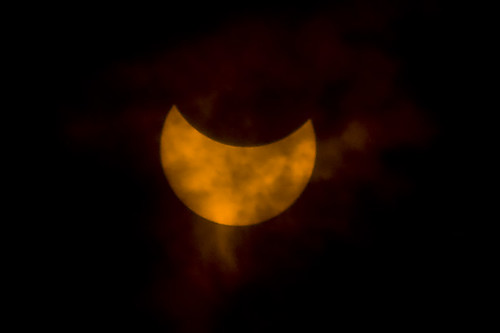
This book of short stories can be found at Amazon UK and Amazon US and I'd highly recommend it for anyone wants to see behind the door into the Beijing of possibilites.

See also the review at Timeout Beijing, where this was book of the month not long ago.