Showing posts with label France. Show all posts

Thursday, June 26, 2008

Green Flash and more

I'm still battling with Mathematica too much to write much, though we've had some more great lectures. Nima Arkani-Hamed has given us a great crash-course on LHC physics, which may be available from another school online, so I'll try and dig that out if I can.

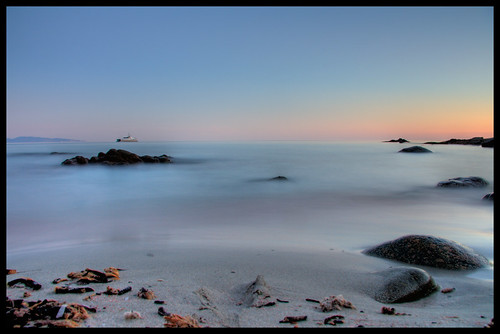
In the meantime we've been having some stunning evenings here and so I took the opportunity to take a couple of rather surreal dusk shots, including this 30 second exposure:
beach at dusk

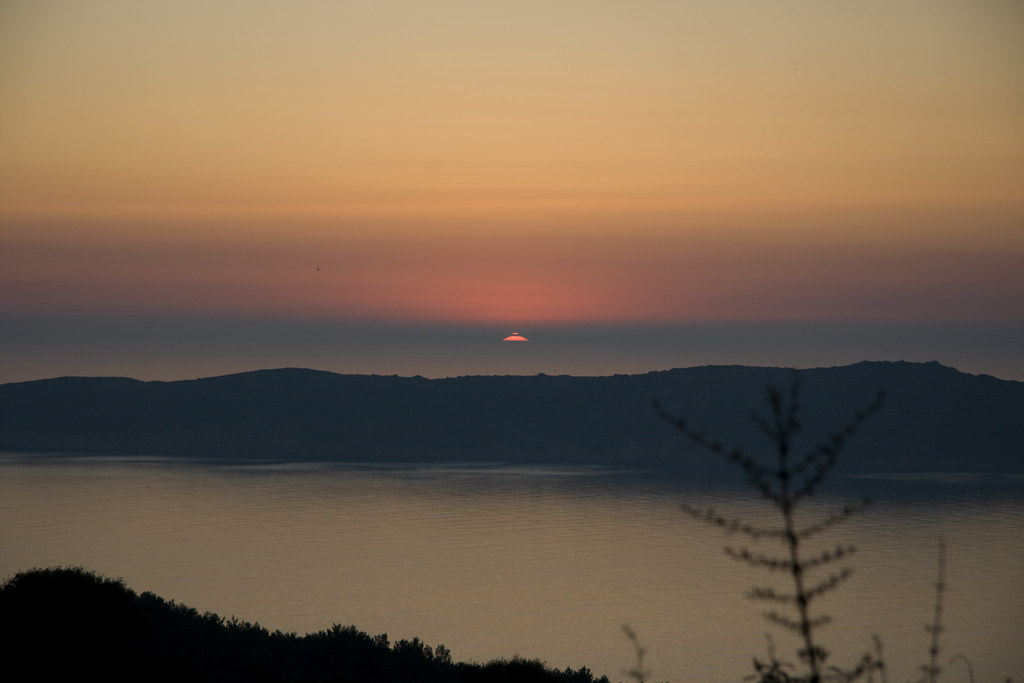
The real excitement for me, however, came when I caught this image (Warning, very very large). It's my first ever capture of the Green Flash, and though it's perhaps the weakest green flash ever caught on camera, it's definitely there. This green flash came from a mock mirage sunset which is created when the temperature as a function of the height in the atmosphere becomes non-monotonic and develops a turning point. See an explanation here. Just before the green flash I caught an image of the separation which is somewhat easier to see, here:
separation
Click for a larger size!

Saturday, June 21, 2008

Update attempt

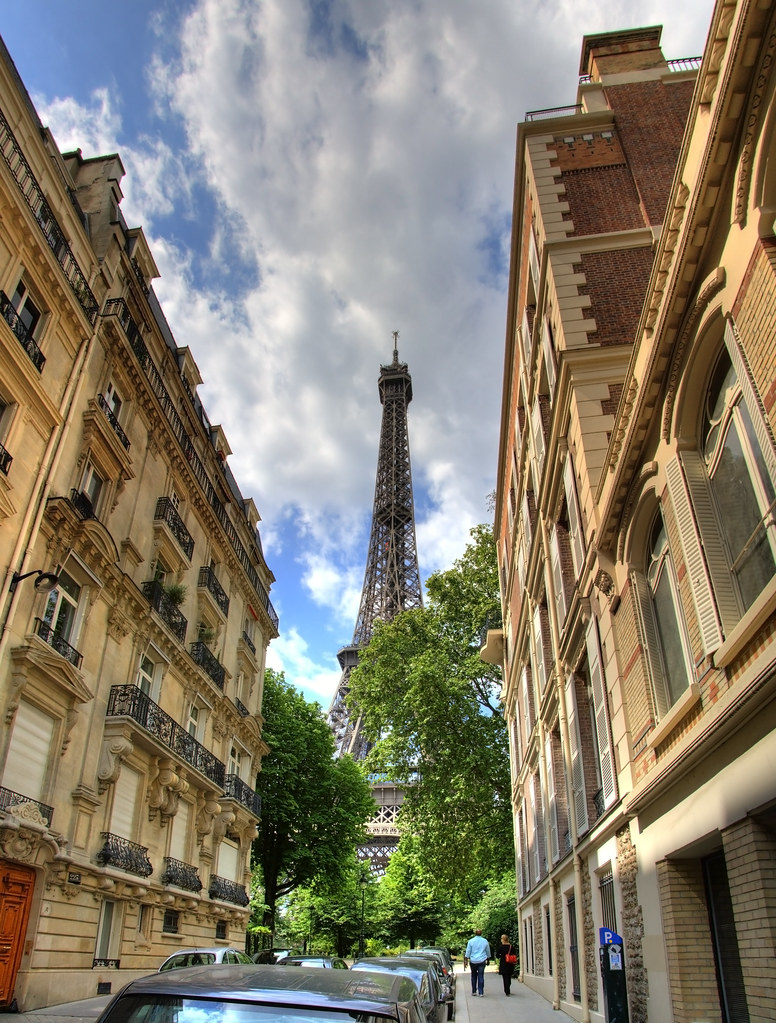
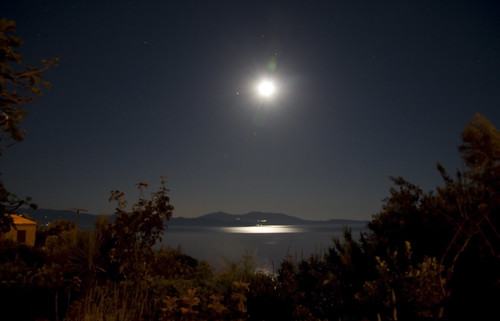
No time to write much at the moment, working hard on a current problem which isn't giving me any chance to get to the beach which is five minutes walk from the institute. Perhaps this afternoon. We've been having some great lectures which I just can't justify writing up, given the work that needs to be done, but Andy Strominger is always inspiring and his lectures here have been no exception. Anyway, for now I can just post a couple of photos. One more from Paris (without solar halo) and one from the first night here as I was walking back home.

Eiffel Tower new view
moon on the water

Unlikely to have much of a chance to write anything for the time being, but for now, all is good in Cargese.

Sunday, June 15, 2008

Synchronicity in Paris!

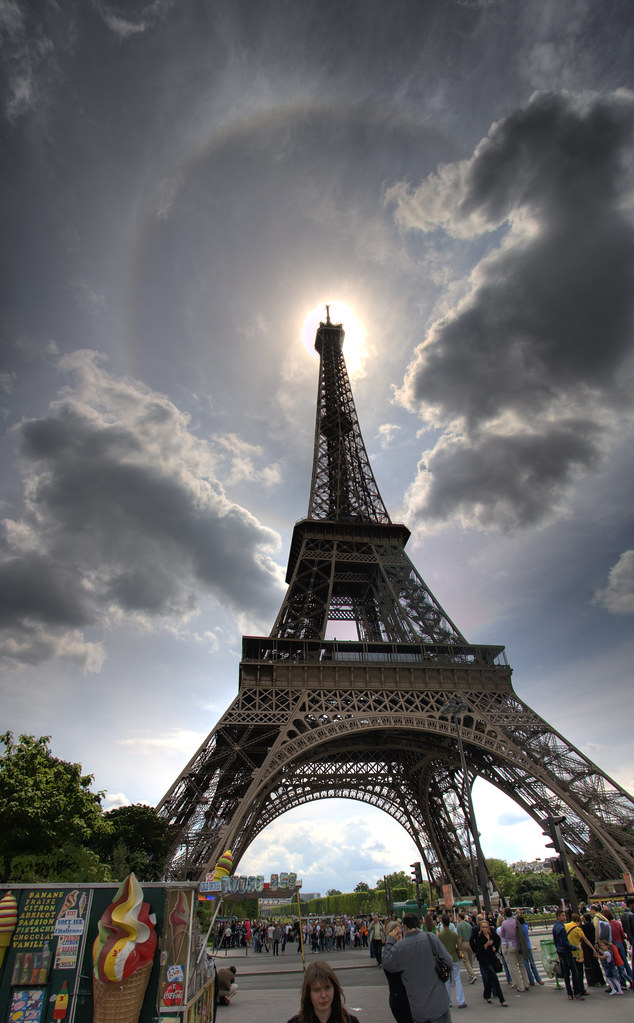
For me photography is still about those lucky moments where you're in the right place at the right time. However, it's also to a large extent about noticing those moments that most people don't. I'm still shaking from the excitement yesterday of being at the scene of something truly spectacular, and incredibly of being the only person with their jaw dropping at the incredible thing in front of my eyes. Anyway, words don't do it justice! This is a 22 degree solar halo in perhaps the top place in the world I would have hoped to see one!
Eiffel Tower panorama solar halo
This was a six photo panorama, which especially hard to get right when you're dribbling with excitement :-)

Go to Atmospherics Optics for a great explanation of this phenomenon.

Also see here for more of my photos of this.

Sunday, January 27, 2008

Photos from CERN

As I mentioned a couple of posts back, we were lucky enough to go the 100m down into the chamber for the CMS detector. I got a few pictures while we were there.

First of all, on the surface before going into the cavern and indeed all around the CERN sites you see huge gas tanks. These tanks are for storing helium. The detectors and accelerator have to be cooled to just above absolute zero (there are superconducting magnets for the accelerator which only work at very low temperatures). If there is a problem with any of the components they may have to be taken apart, or at least looked at in detail. In order to do this, the helium will be released and the parts will warm back up. CERN has the largest supply of helium in the world and this is both expensive stuff and not easy to produce. It is still being produced now in order that they have a large enough supply. So, when you release the helium you want to store it somewhere, not just let it off into the atmosphere, and that is what these enormous tanks are for. The circumference of the tanks is, I guess, around 2 or 3 meters.
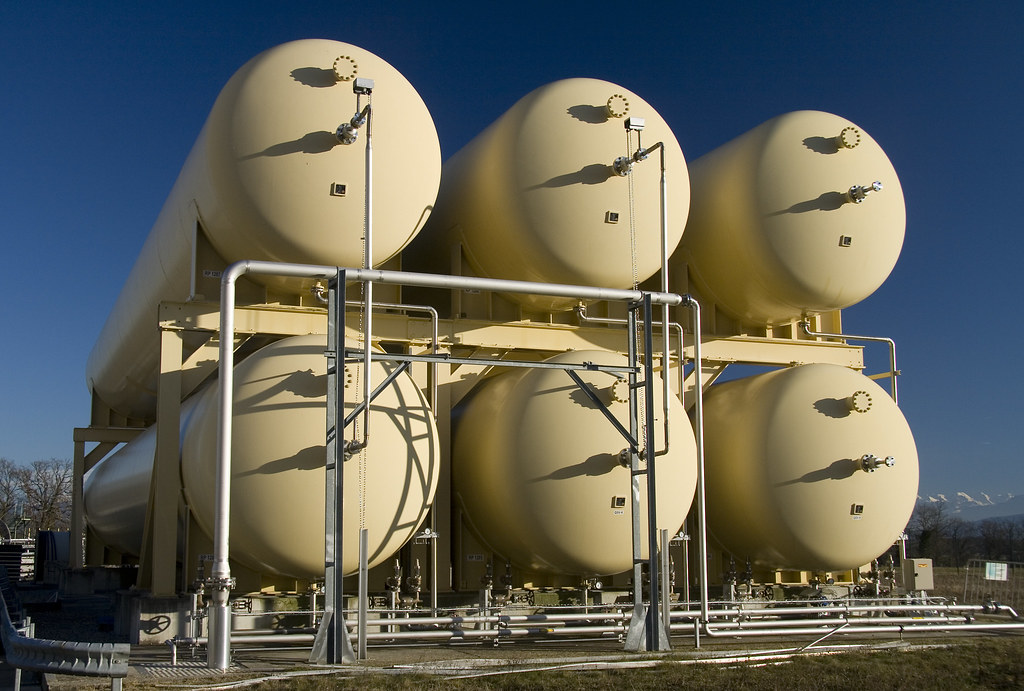
LHC helium tanks
100m down into the cavern and we were lucky enough to see the last two pieces of the CMS detector being readied to slot into place. The following panorama is from 6 shots, which don't go together perfectly, but give a pretty good impression of the complexity of the detector:
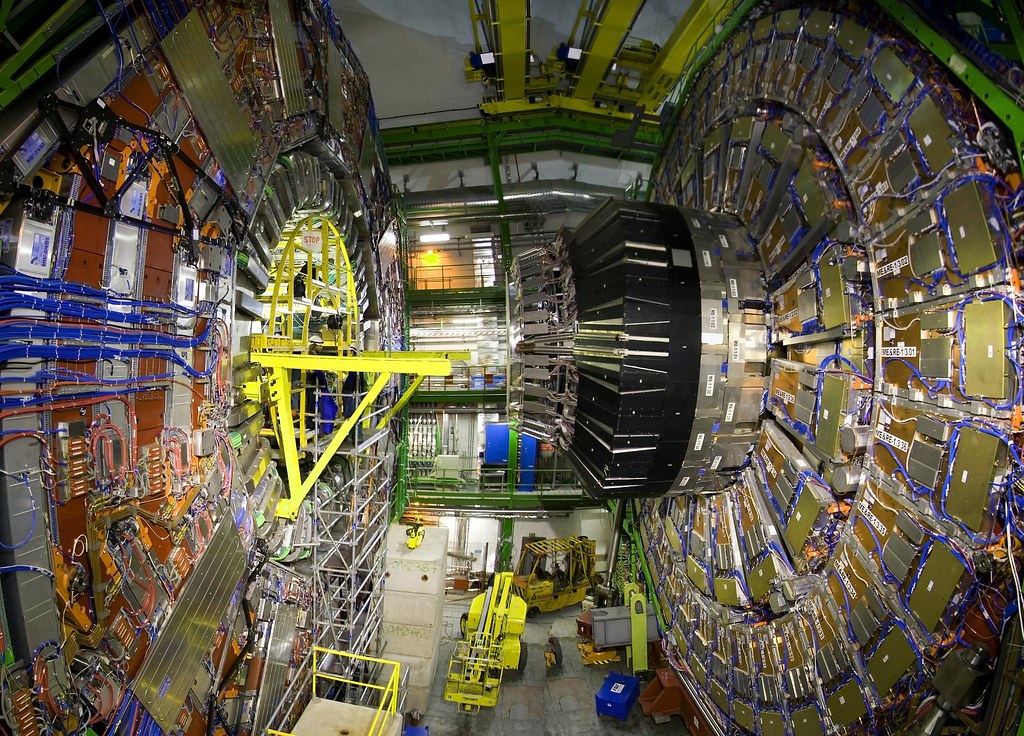
CMS detector panorama
The largest component of the CMS detector weighs in at 2000 tonnes. Your average crane cannot carry this sort of weight and so in order to lower it into the cavern they had to construct a specially designed pulley system. The two towers on top of the CMS building housed the wheels for this pulley. In the background of this picture is Mont Blanc:
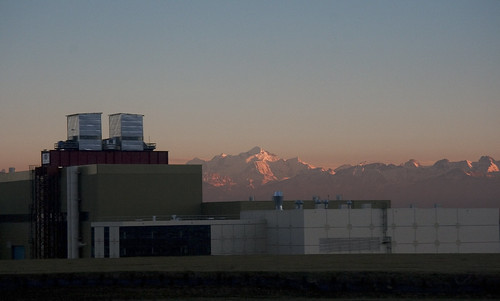
CMS and Mont Blanc
Mont Blanc can be seen more clearly in this picture which I took as we were taking the bus to the site. The new polarising filter for my camera works very well at removing the reflections from the glass in the bus. the extreme blue in the sky in the picture of the helium tanks also comes from using a polarising filter which helps to remove any haze:
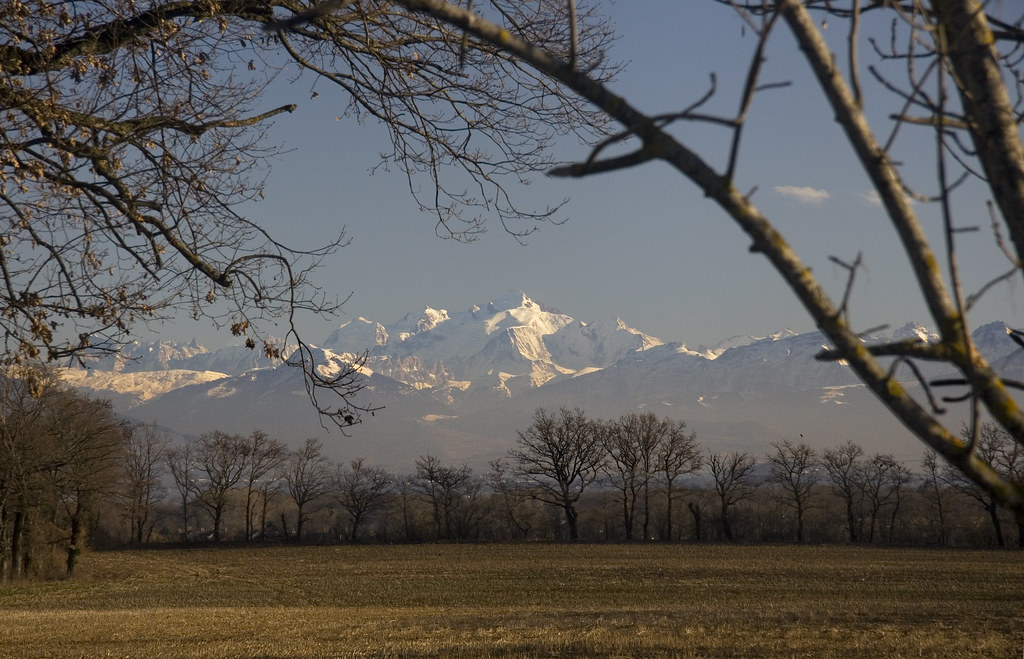
Mont Blanc
See here for a couple more from the detector.